Home
Home
Beyond the CPU Clock: Why Specialized Time Processors Drive Modern System Precision
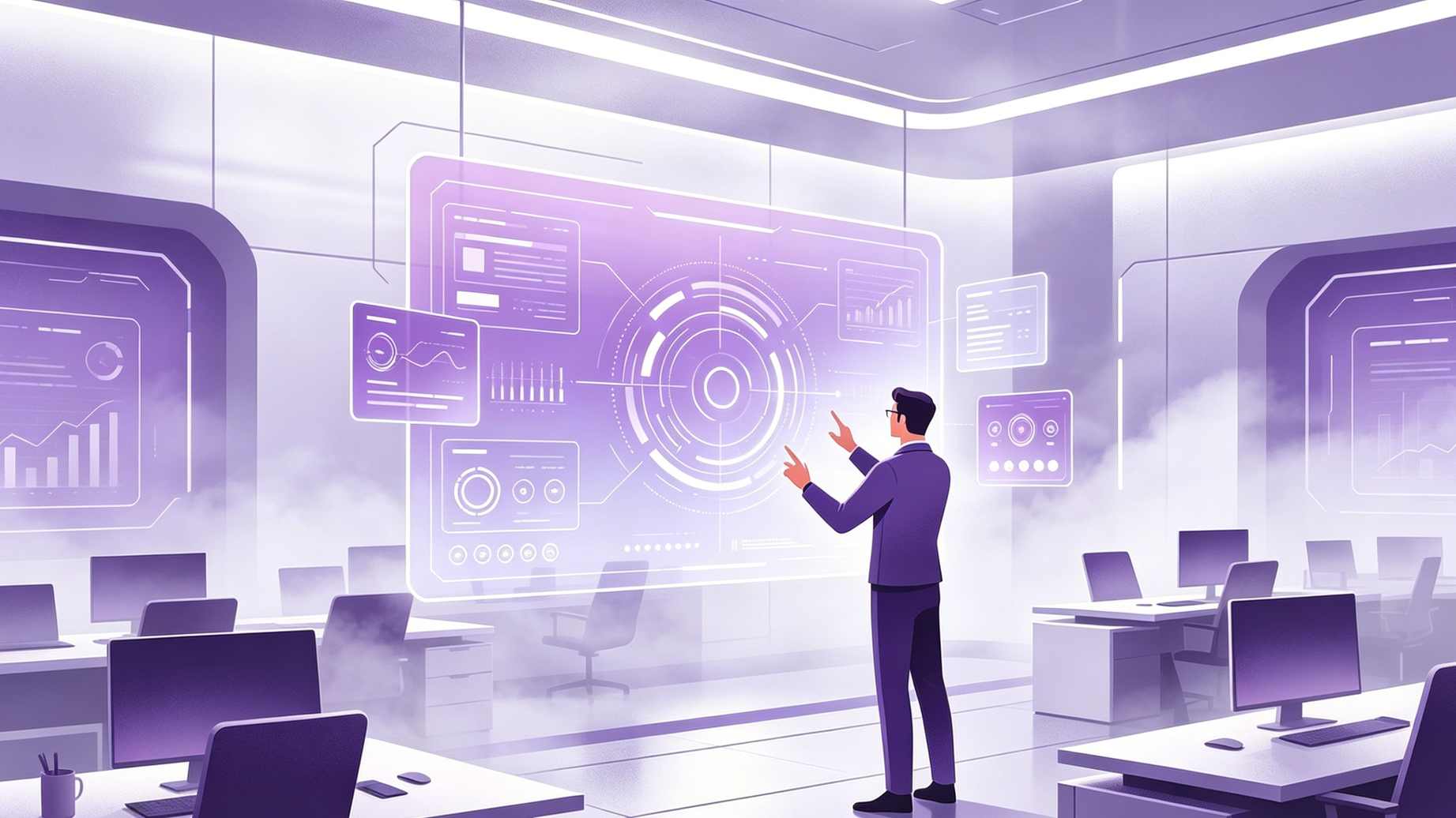
The term "time processor" is often a source of confusion because it does not refer to a single, universal component in the tech world. Instead, it represents a critical category of technology that bridges the gap between raw computing power and the relentless precision of the physical world. Whether it is managing the microsecond-level fuel injection in a diesel engine, synchronizing global data centers, or measuring how efficiently a program utilizes silicon, time processors are the silent orchestrators of accuracy.
To understand what a time processor truly is, one must look past the general-purpose Central Processing Unit (CPU) and examine how time is captured, manipulated, and measured across different technological domains.
The Dedicated Hardware: Enhanced Time Processor Units (eTPU)
In the realm of embedded systems—specifically within the automotive and industrial sectors—a time processor is often a physical co-processor known as an eTPU. While a standard CPU handles general logic and calculations, the eTPU is designed to manage time-sensitive events independently, minimizing the overhead on the main processor.
Managing Real-Time Complexity
In our technical analysis of automotive engine management systems, the eTPU acts as a sophisticated timing computer. Consider a diesel engine's fuel injection system. The system must detect the exact angular position of the engine's crankshaft to determine when to fire the injectors. In high-performance chips like the MPC5554, the eTPU handles these high-speed input and output signals with nanosecond precision.
The eTPU architecture typically features:
- Independent Micro-engines: These can fetch, decode, and execute instructions without interrupting the main CPU.
- Multi-Channel Scheduling: Up to 16 or 32 independent timer channels, each capable of generating digital signals or capturing external events.
- Zero-Latency Response: Because the eTPU has its own code and data memory, it can react to a sensor pulse (like a crankshaft "missing tooth" signal) and calculate the next injection event in parallel with other system tasks.
By offloading these repetitive, high-frequency timing tasks to a dedicated time processor, the main system achieves a level of deterministic execution that is impossible for a general-purpose processor alone.
Digital Signal Processors and Time-Domain Processing
Another major context for "time processor" is the Digital Signal Processor (DSP). Unlike traditional microprocessors that process data as discrete values, DSPs are optimized to handle continuous streams of "time-domain" data.
Transforming Signals Over Time
In audio engineering and sensor telemetry, data arrives as a sequence of samples taken at specific time intervals. A time processor in this context is responsible for mathematical operations like convolution, filtering, and Fourier transforms.
From an experiential standpoint, when we monitor a DSP's performance in real-time audio effects, the difference is stark. A general-purpose CPU might introduce "jitter"—tiny fluctuations in the timing of data delivery—which results in audible clicks or latency. A DSP, however, uses a specialized instruction set (like Multiply-Accumulate or MAC operations) to ensure that every sample is processed exactly when it needs to be. This is why specialized hardware is still the gold standard for reverb, echo, and pitch-shifting effects, where the perception of sound is entirely dependent on the precise manipulation of time intervals.
The Infrastructure Level: Time and Frequency Processors
In high-stakes environments like telecommunications, power grids, and financial trading platforms, "time processor" refers to rack-mounted hardware or PCIe cards dedicated to precision timing.
Synchronizing the Global Grid
Hardware like the Symmetricom bc635S serves as a Time and Frequency Processor. These devices do not "process" data in the sense of running apps; they process the very fabric of time for a network.
- Precision Inputs: These processors translate signals like IRIG B, NASA 36, or GPS-based PPS (Pulse Per Second) signals.
- Discipline Oscillators: Central to these modules is often a disciplined 10 MHz oscillator that provides a stable frequency reference to the host computer system.
- Event Capture: They feature external event capture registers that log the exact microsecond a hardware interrupt occurs.
For data acquisition systems, having a dedicated time processor ensures that data points gathered across different physical locations can be aligned with absolute chronological certainty.
Software Metrics: Understanding CPU Time
For software developers and systems administrators, "processor time" or "CPU time" is not a piece of hardware but a vital performance metric. It represents the actual duration a processor spends executing instructions for a specific task, excluding time spent waiting for I/O operations or network responses.
Measuring Efficiency
When we optimize high-load applications, we distinguish between "Wall-Clock Time" (the total time elapsed) and "CPU Time."
- User CPU Time: The time spent executing code within the application itself.
- System CPU Time: The time the kernel spends performing tasks on behalf of the application (e.g., memory allocation).
Modern logging tools, such as the Monolog Timer Processor, allow developers to "tag" fragments of code to measure these intervals. By analyzing these metrics, engineers can identify bottlenecks where a process might be consuming excessive cycles without making progress, essentially "starving" other tasks of the processor's attention.
Time Processors in Game Design and Virtual Environments
In the architecture of modern game engines, the "Time Processor" is a logical component responsible for maintaining the "Game Clock."
Master and Slave Clocks
Game design requires a sophisticated scheduler to fire events—such as physics updates or AI decisions—at fixed intervals.
- The Master Clock: Usually resides on the server, acting as the ultimate authority on the "world time."
- The Slave Clock: Resides on the client side, attempting to predict and synchronize with the master clock to hide network latency.
A well-implemented time processor in a game engine handles "time dilation" (slowing down or speeding up gameplay) without breaking the underlying physics engine, ensuring that the simulation remains stable regardless of the frame rate.
Key Differences: Hardware vs. Software Time Processors
| Feature | Hardware (eTPU/DSP) | Software (CPU Time/Metric) |
|---|---|---|
| Primary Goal | Real-time execution and signal control | Performance measurement and optimization |
| Latency | Sub-microsecond, deterministic | Dependent on OS scheduling |
| Context | Embedded, Audio, Industrial | Programming, Web Services, OS |
| Execution | Parallel to the main CPU | Sequential within the CPU cycles |
What Is the Future of Specialized Timing?
As we move toward a world of autonomous vehicles and 6G networks, the demand for specialized time processors is accelerating. The rise of AI-specific hardware often includes dedicated timing blocks to manage the massive data throughput required for neural networks. In these scenarios, even a nanosecond of misalignment can lead to "data poisoning" or system failure.
We are seeing a shift from general-purpose computing toward "Heterogeneous Architecture," where the CPU is just one of many specialized engines. In this ecosystem, the time processor remains the most critical component for ensuring that the digital world stays in sync with physical reality.
Conclusion
A time processor is the unsung hero of the digital age. It exists as a dedicated co-processor (eTPU) in your car's engine, as a high-speed signal handler (DSP) in your headphones, as a precision reference in global networks, and as a vital metric in the code that runs our world. Understanding which "time processor" you are dealing with is essential for anyone involved in system design, software development, or industrial engineering. By delegating the complexity of time to specialized hardware or rigorous metrics, we achieve the precision required for the next generation of technological innovation.
FAQ: Frequently Asked Questions about Time Processors
What is the difference between a timer and a time processor?
A standard timer/counter is a simple peripheral that counts clock cycles and triggers interrupts. A time processor (like an eTPU) is a much more complex, programmable unit with its own instruction set that can perform sophisticated algorithms and manage multiple channels without CPU intervention.
Do I need a dedicated time processor for my project?
If your project involves real-time control (like robotics or high-speed sensors) where latency must be guaranteed, a dedicated hardware time processor or a DSP is often necessary. For general app development, you will primarily deal with "CPU Time" as a metric for optimization.
How does a DSP handle time-domain data differently?
A DSP is architected for "stream processing." It can perform mathematical operations on data as it arrives, ensuring that the output is produced in a fixed, predictable amount of time, which is crucial for audio and video applications.
What is "Wall-Clock Time" vs. "Processor Time"?
Wall-Clock Time is the time you see on your watch from the start to the end of a process. Processor Time is only the time the CPU was actually "working" on that specific process, ignoring the time the process spent "sleeping" or waiting for the hard drive.
Is the TPU in Google's AI chips a time processor?
No. In the context of AI, "TPU" stands for Tensor Processing Unit, which is designed for matrix multiplication. However, many AI systems use separate time-processing blocks to synchronize data across large clusters of TPUs.
-
Topic: ANALYSIS OF PARALLEL PROCESSING EFFECTS THROUGH A CO-PROCESSOR IN DIESEL ENGINE MANAGEMENT SYSTEMhttps://link.springer.com/content/pdf/10.1007/s12239-015-0083-5.pdf
-
Topic: bc635S Datum (Time and Frequency Processor) | ArtisanTG™https://www.artisantg.com/TestMeasurement/89408-1/Microsemi-Symmetricom-Datum-bc635S-Time-and-Frequency-Processor?srsltid=AfmBOorfxZmLBUYuXNJB9KyZagWTOSTXxTjXYjDI3WTzBvKCkG9N2_SB
-
Topic: Time processorhttps://numbat.sourceforge.net/numbbatV2/time_processor.html