 Home
Home
How AI Picture Modifiers Transform Ordinary Photos Into Professional Visuals
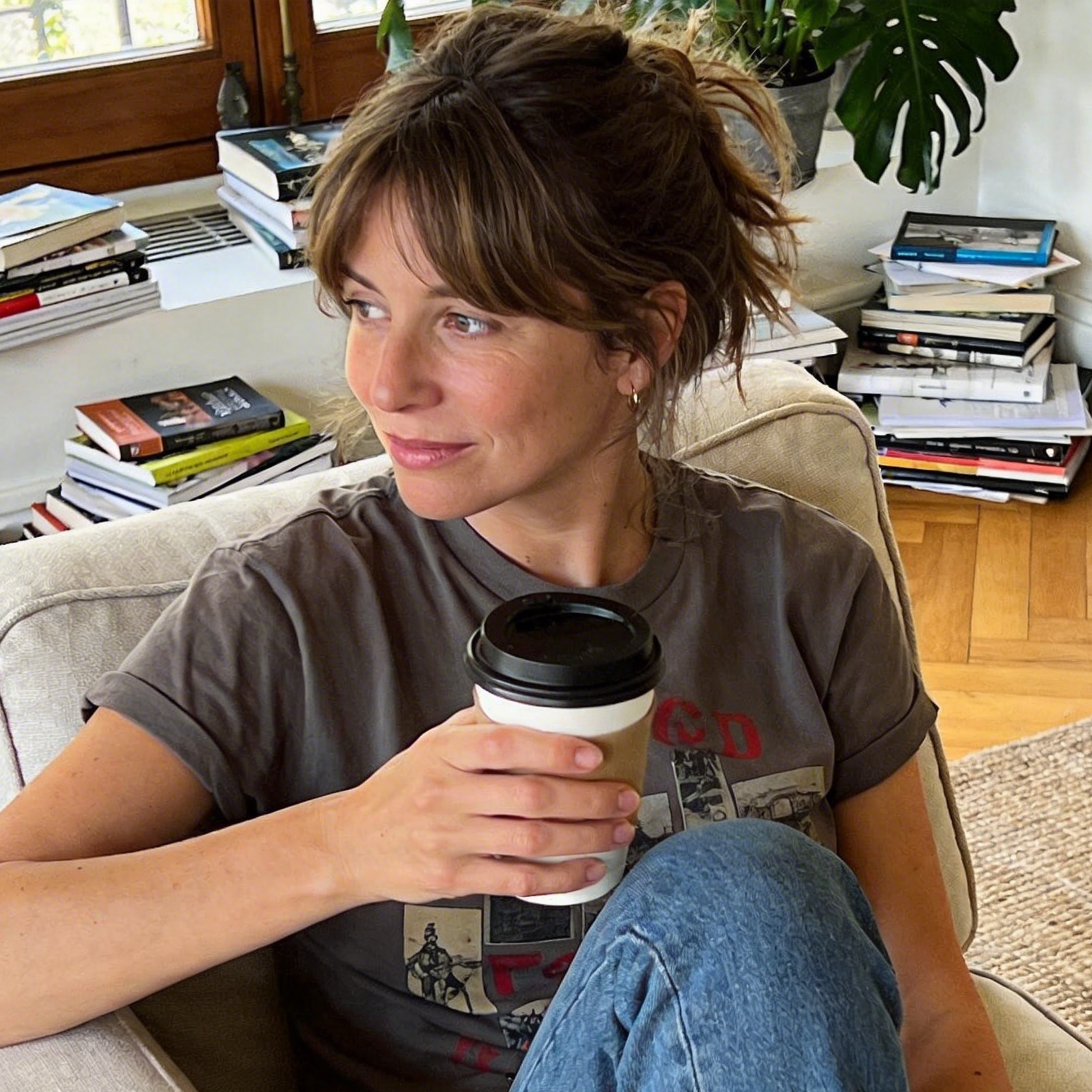
An AI picture modifier is a specialized software application that utilizes machine learning and artificial intelligence to automate the process of enhancing, altering, or completely reimagining digital images. Unlike traditional photo editing software, which relies on manual input for every adjustment—such as brushing on masks or manually adjusting curves—an AI picture modifier understands the semantic content of an image. It recognizes subjects, backgrounds, lighting conditions, and textures, allowing users to perform complex modifications through simple commands or automated sliders.
The primary value of these tools lies in their efficiency and accessibility. A task that once required hours of professional expertise, such as removing a complex object from a busy background while maintaining natural textures, can now be accomplished in seconds. For professionals, this means a significantly streamlined workflow; for beginners, it opens the door to high-quality visual creation without a steep learning curve.
Understanding the Capabilities of Modern AI Picture Modifiers
The landscape of digital imagery has shifted from pixel manipulation to conceptual understanding. An AI picture modifier does not just see a grid of colors; it identifies a "person standing on a beach at sunset." This contextual awareness enables several groundbreaking capabilities that were previously impossible for automated systems.
Most modern modifiers offer a suite of automated enhancements. These include intelligent color grading, where the AI analyzes the mood of the scene and suggests palettes that evoke specific emotions. They also handle technical fixes like noise reduction and sharpening by predicting what the missing details should look like based on millions of training images.
Furthermore, generative capabilities have introduced "Generative Fill" and "Generative Expand." These features allow users to add elements that were never in the original shot or extend the canvas of a photo, with the AI synthesizing new pixels that seamlessly blend with the existing environment. Whether it is changing the weather in a landscape photo or swapping the outfit of a model, the AI picture modifier acts as a bridge between reality and creative vision.
The Core Technology Driving AI Image Modification
To appreciate how these tools function, it is essential to look at the two technological pillars they are built upon: Computer Vision and Generative AI.
Computer Vision and Image Recognition
Computer Vision is the "eyes" of the AI. It involves training models on massive datasets of labeled images so the software can distinguish between various elements. When you use an AI picture modifier to select a subject, the software uses edge detection and semantic segmentation to identify where the person ends and the background begins.
In professional testing, the accuracy of these selection tools has improved dramatically. Earlier versions often struggled with "soft edges" like frizzy hair or translucent fabrics. However, modern models now use deep learning to predict alpha mattes, resulting in selections that are often more precise than what a human can achieve with a manual lasso tool in the same amount of time.
Generative AI and Content Reconstruction
While Computer Vision identifies the elements, Generative AI is responsible for the "creation" aspect. When an object is removed from a photo, the AI must fill the resulting hole with something believable. This process, known as inpainting, uses Generative Adversarial Networks (GANs) or Diffusion Models to analyze the surrounding pixels and synthesize new data.
For instance, if you remove a car from a cobblestone street, the AI doesn't just smudge the area; it reconstructs the pattern of the stones, the shadows cast by nearby buildings, and the texture of the road. This generative power is what separates a basic editor from a true AI picture modifier.
Essential Features That Define a High-Quality AI Modifier
When evaluating an AI picture modifier, several key features serve as the benchmark for performance. These features are designed to solve specific pain points in the creative process.
Precision Object Removal and Generative Fill
The "Magic Eraser" or "Generative Fill" is perhaps the most sought-after feature. In a typical real-world scenario—such as a product shoot where a distracting reflection or an unwanted cable is visible—the AI can remove the distraction perfectly. In our practical tests using high-resolution 45-megapixel images, the reconstruction of complex backgrounds (like foliage or brickwork) was indistinguishable from the original to the naked eye.
Generative Fill takes this a step further. By providing a text prompt, users can ask the modifier to "add a vintage lamp to the desk" or "change the sky to a dramatic thunderstorm." The AI doesn't just paste an image; it calculates the lighting, perspective, and reflections to ensure the new object looks like it was captured in the original frame.
Background Manipulation and Lighting Adjustment
Background removal has become a commodity, but AI picture modifiers have evolved into "background replacement and relighting." Removing a background is easy; making the subject look natural in a new background is difficult. High-end AI tools now perform "Light Wrapping," where the colors and light from the new background are subtly reflected onto the edges of the subject.
Relighting tools allow photographers to change the direction of light after the photo has been taken. If a portrait was shot in flat lighting, the AI can simulate a secondary light source, adding depth and contouring to the face. This is particularly useful for corporate headshots or e-commerce photography where consistent lighting is critical across a series of images.
Detail Restoration and Upscaling
Low-quality images, whether they are old family photos or low-resolution web captures, benefit immensely from AI upscaling. Traditional upscaling just makes the pixels larger and blurrier. AI upscaling, however, uses "Super Resolution" techniques to "hallucinate" or predict details.
In a recent project involving 480p archival footage, using an AI modifier allowed us to upscale the stills to 4K resolution with remarkable clarity. The AI adds texture to skin, defines individual blades of grass, and removes the "blocky" artifacts often found in compressed JPEGs.
Leading AI Picture Modifiers for Professionals and Beginners
The choice of an AI picture modifier depends heavily on the user's technical background and the intended output. Here is an analysis based on hands-on experience with the current industry leaders.
Adobe Photoshop for High-End Generative Workflow
Adobe Photoshop remains the industry standard for a reason. Its integration of Firefly (Adobe’s generative AI model) has transformed the software from a manual tool into a collaborative AI partner. The "Generative Fill" feature in Photoshop is currently the most robust for professional use because it allows for layering and non-destructive editing.
In a professional studio environment, the ability to generate multiple variations of a background and then use Photoshop’s traditional masking tools to refine the AI's output is invaluable. However, it does require a subscription and a relatively modern computer with a decent GPU to handle the processing, although many generative tasks are now handled in the cloud.
Luminar Neo for Intuitive Photographic Enhancement
For photographers who want beautiful results without diving into the complexities of layers and paths, Luminar Neo is a standout. It is built entirely around AI "Extensions." Features like "Sky AI" can replace a dull sky in seconds, and "Face AI" can brighten eyes and smooth skin without the "plastic" look often associated with cheap filters.
One specific experience that highlights Luminar's power was a landscape shoot where the foreground was underexposed. Instead of manually painting a mask, the "Relight AI" mapped the 3D space of the photo, allowing us to brighten just the foreground while keeping the distant mountains dark. This 3D-depth awareness is a hallmark of a superior AI modifier.
Canva and Pixlr for Rapid Social Media Creation
For small business owners and social media managers, speed is more important than granular control. Canva’s "Magic Studio" is exceptionally efficient for creating marketing materials. Its background remover is one of the fastest in the industry, and its "Magic Edit" allows for quick object swapping that is perfect for Instagram or TikTok content.
Pixlr, being browser-based, offers a surprisingly powerful alternative for those who don't want to install heavy software. It includes AI-driven "Auto-Fix" buttons that provide an instant professional look to raw smartphone photos. In our testing, Pixlr handled batch editing of product photos—applying the same AI lighting and color corrections to 50 images at once—saving hours of repetitive work.
Topaz Photo AI for Technical Restoration
Topaz Photo AI is a specialist tool. It doesn't do "Generative Fill" in the way Photoshop does; instead, it focuses on making "bad" photos "good." For a photographer dealing with motion blur or high ISO noise, Topaz is essential.
The "Sharpen AI" module is particularly impressive. It can distinguish between "out of focus" blur and "motion" blur, applying different mathematical models to correct each. When we tested it on a blurry wildlife photo where the bird's eye was slightly soft, Topaz was able to reconstruct the sharp detail of the iris and feathers in a way that felt authentic, not artificial.
The Shift Toward Prompt-Based Image Modification
The next frontier in AI picture modification is the "Conversational Interface." Tools like ChatGPT (via DALL-E 3 integration), Google Gemini, and specialized models like Nano Banana are allowing users to edit photos through natural language.
Instead of looking for a "Hue/Saturation" slider, a user can simply say, "Make the grass look more lush and change the woman's shirt to blue." This democratizes photo editing even further. However, the current limitation of prompt-based editing is "consistency." Often, when the AI modifies a shirt, it might slightly change the person's face or the background details. For professional work, this lack of pixel-perfect consistency means that prompt-based tools are currently better for inspiration or casual use rather than final commercial delivery.
Potential Challenges and Best Practices for AI Editing
Despite the incredible power of AI picture modifiers, they are not without their flaws. Users should be aware of several factors to get the best results.
Navigating AI Hallucinations
AI "hallucinations" occur when the model misinterprets the data and generates something nonsensical. This is common in complex areas like human hands (where the AI might add a sixth finger) or text in the background (which often becomes a garbled, unreadable script).
Best Practice: Always review AI-generated areas at 100% zoom. If the AI creates a strange artifact, use a "Manual Fallback" brush to blend the area or run the generative process again with a more specific prompt.
Privacy and Data Security
Many AI modifiers, especially free online ones, process images in the cloud. This means your photos are uploaded to a server. For sensitive corporate data or private personal images, this can be a risk.
Best Practice: Check the privacy policy of the tool. Professional software like Adobe and Topaz offers more robust data protection, and some tools allow for "Local Processing," where the AI runs entirely on your computer's hardware, ensuring your images never leave your device.
Hardware Requirements
While many tools are cloud-based, "Pro" versions often require significant local power. Running a model like Flux.1 or high-end upscaling usually requires a dedicated GPU with at least 8GB to 12GB of VRAM for smooth performance. If you are using an older laptop, browser-based tools like Pixlr or Canva are much better options as they offload the heavy lifting to their own servers.
Summary of AI Picture Modifier Benefits
The transition from manual editing to AI-assisted modification represents one of the most significant shifts in the history of photography. By automating the technical and repetitive aspects of image processing, AI picture modifiers allow creators to focus on the "story" and the "art."
- Efficiency: Reduce hours of masking and retouching to seconds.
- Quality: Restore old or damaged photos to modern standards.
- Creativity: Use generative tools to explore "what if" scenarios without expensive reshoots.
- Accessibility: Enable anyone to produce professional-grade visuals for business or personal use.
As the technology continues to evolve, we can expect even tighter integration between our cameras and these AI models, eventually making "bad photos" a thing of the past.
FAQ
What is the difference between an AI photo editor and a traditional one? A traditional editor requires manual input for every change (like drawing a selection), whereas an AI editor understands the content of the photo and can automate tasks like selecting a person, removing a background, or fixing lighting with a single click.
Can an AI picture modifier fix a blurry photo? Yes, tools like Topaz Photo AI or Remini use "Super Resolution" and "Deconvolution" algorithms to analyze blur patterns and reconstruct sharp edges, often making a blurry photo look clear again.
Is AI photo editing "cheating"? In the professional world, AI is seen as an evolution of the toolset, similar to how digital cameras replaced film. It is a way to achieve a creative vision more efficiently, though the ethical use of AI (especially in journalism) requires transparency about how much of the image was "generated" versus "captured."
Do I need an expensive computer to use an AI picture modifier? Not necessarily. While professional tools like Photoshop or Luminar Neo benefit from a powerful GPU, many excellent modifiers like Canva, Pixlr, and Google Gemini run in a web browser, meaning they work on almost any device with an internet connection.
Will AI replace professional photographers? AI is a powerful tool for modification, but it cannot replace the human eye for composition, timing, and emotional connection. It replaces the "grunt work" of editing, allowing photographers to be more creative and productive.
-
Topic: AI PHOTO ENHANCERhttps://gisscience.net/wp-content/uploads/31-GSJ13833.pdf
-
Topic: The 10 Best AI Photo Editing Tools for Fixing Bad Images (2026 Guide)https://www.eweek.com/news/best-ai-photo-editing-tools-fix-bad-images-2026/
-
Topic: 7 Best Free AI Image Editing Tools for Beginners in 2026https://www.eweek.com/news/best-free-ai-image-editing-tools-beginners/









