Home
Home
How Corporate Planning Bridges the Gap Between Vision and Execution

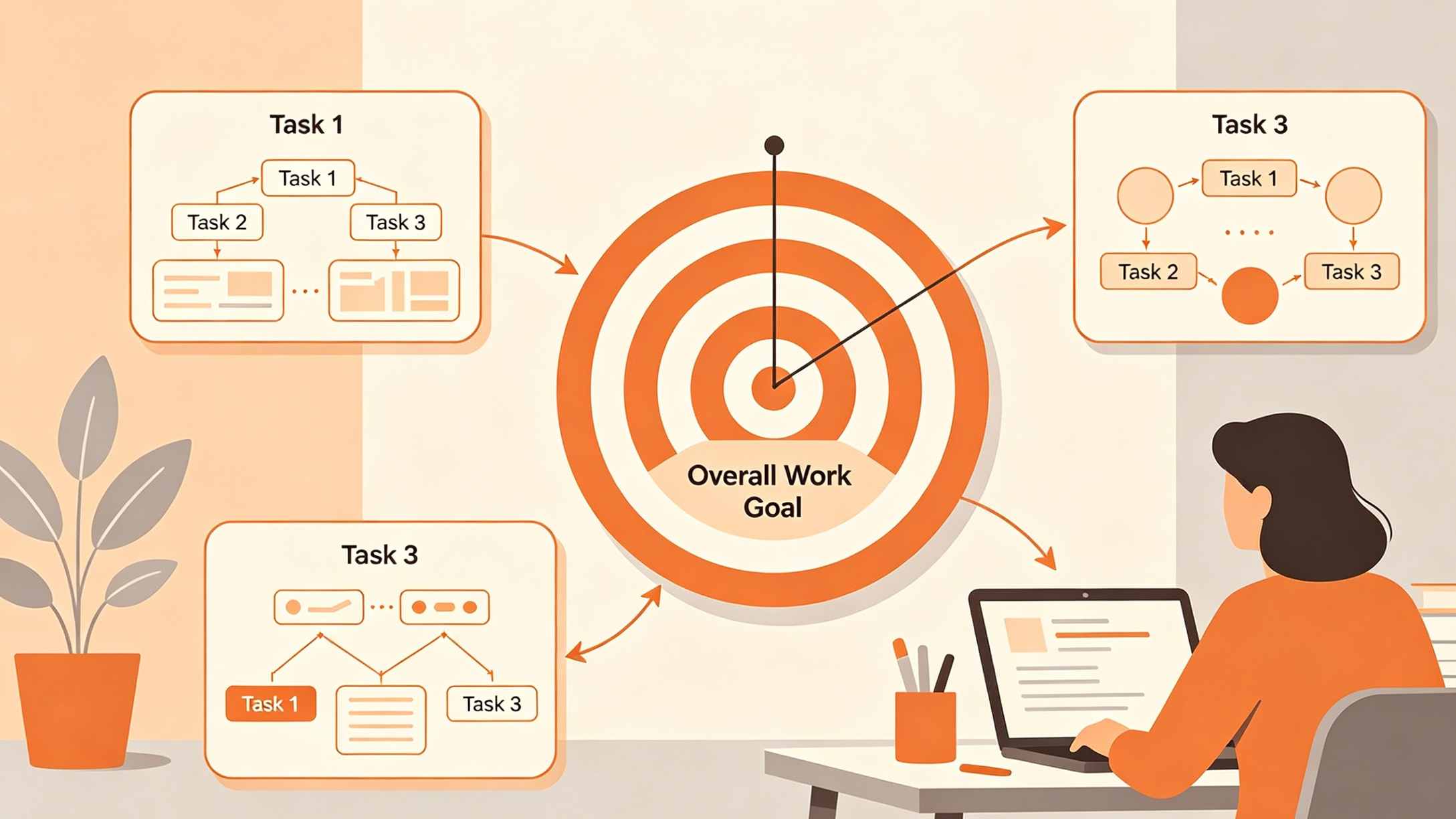
Corporate planning is the systematic process by which an organization defines its long-term direction, sets specific objectives, and allocates resources to ensure every department moves in unison toward a shared goal. In the modern business landscape, where volatility is the only constant, corporate planning serves as a central nervous system. It transforms abstract leadership aspirations into a concrete roadmap, ensuring that high-level vision does not remain a static document on a server but becomes a living guide for daily operations.
The Core Essence of Corporate Planning
At its most fundamental level, corporate planning is about alignment and integration. Organizations often suffer from "silo effects," where the marketing department pursues growth at any cost, finance focuses exclusively on cost reduction, and operations struggles to keep up with fluctuating demands. Corporate planning functions as the "master plan" that resolves these internal contradictions.
It is a multi-dimensional discipline that encompasses financial forecasting, market analysis, resource management, and organizational development. Unlike short-term tactical adjustments, corporate planning typically looks at a three-to-five-year horizon. It asks three critical questions:
- Where is the organization today?
- Where does it want to be in the future?
- What specific resources and steps are required to close the gap?
By answering these questions, the planning process provides a sense of purpose and stability to employees, shareholders, and stakeholders alike.
Corporate Planning vs. Strategic Planning: Clearing the Confusion
One of the most frequent points of confusion in business management is the distinction between corporate planning and strategic planning. While they are inextricably linked, their scope and focus differ significantly.
Strategic Planning: The "Where and Why"
Strategic planning is primarily concerned with the competitive landscape. It focuses on how an organization can differentiate itself from competitors and where it should position itself in the market. It is highly analytical, dealing with long-term vision (often 5+ years) and macro-environmental factors.
Corporate Planning: The "How and When"
Corporate planning is broader and more operational. It takes the "strategy" and turns it into an actionable organizational framework. It includes budgeting, human resource allocation, and the synchronization of business units. If strategic planning decides that a company should enter the European market, corporate planning determines which teams will move, what the quarterly budgets will be, and how the supply chain must adapt to support this move over the next two years.
| Feature | Corporate Planning | Strategic Planning |
|---|---|---|
| Primary Focus | Organizational-wide coordination and execution. | Competitive positioning and market vision. |
| Time Horizon | Short-to-medium term (1–3 years). | Long-term (3–5+ years). |
| Output | Operational budgets, resource maps, KPIs. | Mission statements, core values, market stance. |
| Management Level | Middle and Senior Management. | Board of Directors and C-Suite. |
The Four Key Elements of a Robust Corporate Plan
Drawing from established management frameworks like Michael Porter’s competitive strategy, an effective corporate plan must address four intersecting elements:
1. Internal Strengths and Weaknesses
A plan is only as good as the foundation it is built upon. Organizations must conduct a cold, objective assessment of their capabilities. This includes analyzing proprietary technology, brand equity, workforce expertise, and financial health. In our experience observing successful firm turnarounds, the most common failure point is overestimating internal capacity—trying to launch five new products when the engineering team is only staffed for two.
2. Industry Opportunities and Threats
No company operates in a vacuum. The plan must incorporate external data, such as shifting consumer preferences, regulatory changes, and the emergence of disruptive technologies. A robust plan uses tools like PESTLE (Political, Economic, Social, Technological, Legal, and Environmental) to ensure the organization is proactive rather than reactive.
3. Personal Values and Expectations
Corporate planning is not just about numbers; it is about people. The values of the leadership team and the expectations of the board significantly influence the plan’s direction. Is the organization risk-averse, or does it thrive on aggressive expansion? The planning process must align the corporate roadmap with the ethical and cultural DNA of the company.
4. Broader Societal Expectations
In the modern era, corporate planning must also account for Social Responsibility (CSR) and Environmental, Social, and Governance (ESG) standards. A plan that ignores the societal impact of its operations risks long-term brand damage and regulatory penalties.
The Systematic Process: A Step-by-Step Breakdown
Corporate planning is not a one-time annual retreat; it is a dynamic cycle that requires constant evaluation and refinement.
Step 1: Environmental and Situational Analysis
The process begins with "finding the dots." This involves gathering intelligence from diverse sources: market research, competitor financial statements, and internal performance audits. The goal is to establish a "ground truth"—a realistic baseline of where the company currently stands.
Step 2: Objective Setting (SMART Goals)
Once the environment is understood, the organization must define what success looks like. These objectives must be:
- Specific: Narrowly defined targets (e.g., "Increase market share in the SaaS sector").
- Measurable: Quantifiable metrics (e.g., "by 12%").
- Achievable: Realistic given current resource constraints.
- Relevant: Aligned with the long-term mission.
- Time-bound: A clear deadline (e.g., "by Q4 2026").
Step 3: Strategy Formulation
This is the synthesis stage where the "dots are connected." Leadership decides on the best path to achieve the objectives. This might involve organic growth, mergers and acquisitions, or a pivot toward a new service model. During this phase, various scenarios are modeled to understand the potential impact of different choices.
Step 4: Resource Allocation and Implementation
This is where many plans fail. Execution requires moving money, talent, and technology to the areas that matter most. If the strategy is to lead in innovation, but the R&D budget remains flat while marketing spends increase, the plan is not being implemented. Implementation also involves breaking the plan down into departmental work standards and schedules.
Step 5: Monitoring and Feedback Loops
A plan that isn't measured isn't managed. Organizations must establish Key Performance Indicators (KPIs) and regular review cycles. This creates a feedback loop that allows the company to pivot if the market shifts or if a particular tactic isn't yielding the expected results.
The Levels of Organizational Planning
To be effective, the corporate plan must cascade down through various levels of the organization, becoming more specific at each stage.
The Corporate Level (Strategic)
Managed by the C-suite and Board, this level focuses on the entire organization’s direction. It deals with high-level financial targets, brand positioning, and overall portfolio management.
The Business or Division Level (Tactical)
At this level, specific business units (e.g., the "North American Division" or "Cloud Services Unit") create plans to support the corporate objectives. They focus on how to compete in their specific niches.
The Department or Functional Level (Operational)
This is the granular level. The marketing team, HR department, and production floor create short-term plans (often 3–12 months) that dictate day-to-day activities. These plans include specific work standards, hiring quotas, and project timelines.
The Contingency Plan (Crisis Management)
No plan survives first contact with a crisis intact. Contingency planning involves preparing for "Black Swan" events—unexpected disruptions like supply chain collapses or global economic shifts. It identifies potential risks and creates pre-defined protocols to mitigate damage.
Why Corporate Planning is Essential for Growth
Without a structured planning process, organizations tend to drift. They become "reactive," constantly putting out fires instead of building for the future.
Efficient Resource Allocation
Capital and talent are finite. Corporate planning ensures that these resources are not wasted on low-impact activities. It forces the leadership team to make tough choices about what not to do, which is often more important than deciding what to do.
Improved Coordination and Communication
A well-communicated plan provides a common language for the organization. When everyone understands the roadmap, collaboration improves. A salesperson in the field understands how their targets contribute to the five-year expansion goal, which increases engagement and accountability.
Risk Mitigation
By forcing an analysis of the external environment, corporate planning helps leaders identify threats before they become catastrophes. It encourages a culture of foresight rather than hindsight.
Competitive Advantage
In our analysis of industry leaders, those who maintain a disciplined planning process consistently outperform their peers. They are better at timing market entries, more efficient in their capital expenditures, and faster at adapting to technological shifts.
Common Pitfalls in the Planning Process
Even with the best intentions, corporate planning can go wrong. Recognizing these pitfalls is the first step toward avoiding them.
- The "Paper Plan" Syndrome: Creating a beautiful 100-page document that is never looked at again. Planning must be integrated into monthly performance reviews.
- Lack of Top-Down Support: If the CEO does not champion the plan, the rest of the organization will ignore it.
- Over-Complexity: Using overly jargon-heavy language or excessively complex models can alienate middle management and staff.
- Ignoring the Culture: You can plan for a digital transformation, but if your company culture resists change, the plan will fail. As the saying goes, "Culture eats strategy for breakfast."
- Failure to Pivot: A plan should be a guide, not a straightjacket. Being too rigid in the face of new data can be as dangerous as having no plan at all.
Modern Trends: Agile Corporate Planning
The traditional "once-a-year" planning cycle is becoming obsolete in many industries. High-growth tech companies are moving toward Agile Corporate Planning. This approach involves shorter planning cycles (quarterly instead of annually) and "rolling forecasts."
Agile planning recognizes that the environment changes too quickly for a static three-year plan. Instead, it focuses on high-level "North Star" goals while allowing for significant flexibility in the tactical and operational execution. This requires a high degree of transparency and data fluency across the entire organization.
Summary
Corporate planning is the systematic architecture of an organization's future. It is not merely a financial exercise or a visionary statement, but a comprehensive process that aligns every level of a company—from the boardroom to the front line—toward a unified set of objectives. By integrating internal capabilities with external market realities, corporate planning ensures that resources are deployed with maximum impact, risks are mitigated, and the gap between "where we are" and "where we want to be" is methodically closed.
Frequently Asked Questions (FAQ)
What is the primary goal of corporate planning?
The primary goal is to ensure long-term organizational survival and growth by aligning resources and departments toward common strategic objectives.
Who is responsible for corporate planning?
While the C-suite and Board of Directors set the direction, corporate planning involves managers at all levels to ensure that the strategy is translated into operational reality.
How often should a corporate plan be updated?
While a major strategic review might happen every 3–5 years, the corporate plan should be reviewed quarterly and adjusted annually to reflect changes in the market and internal performance.
Can small businesses benefit from corporate planning?
Absolutely. While the process may be less formal, small businesses need corporate planning even more than large ones to ensure their limited resources are not wasted on unproductive activities.
What tools are used in corporate planning?
Common tools include SWOT analysis, PESTLE analysis, the Balanced Scorecard, Porter’s Five Forces, and various financial modeling software for forecasting.
What happens if a company does not have a corporate plan?
Without a plan, companies often suffer from fragmented decision-making, inefficient resource use, and a reactive culture that makes them vulnerable to competitors and market shifts.
-
Topic: Understanding Corporate Planninghttps://dr.ntu.edu.sg/server/api/core/bitstreams/01d5a9fd-8958-4fd1-a4fd-7e411879c699/content
-
Topic: Strategic planning - Wikipediahttps://en.wikipedia.org/wiki/Business_objectives
-
Topic: Organizational Planning | Types, Steps & Examples - Lesson | Study.comhttps://study.com/academy/lesson/three-levels-of-organizational-planning.html