Home
Home
How to Accurately Translate English to Portuguese for Any Context

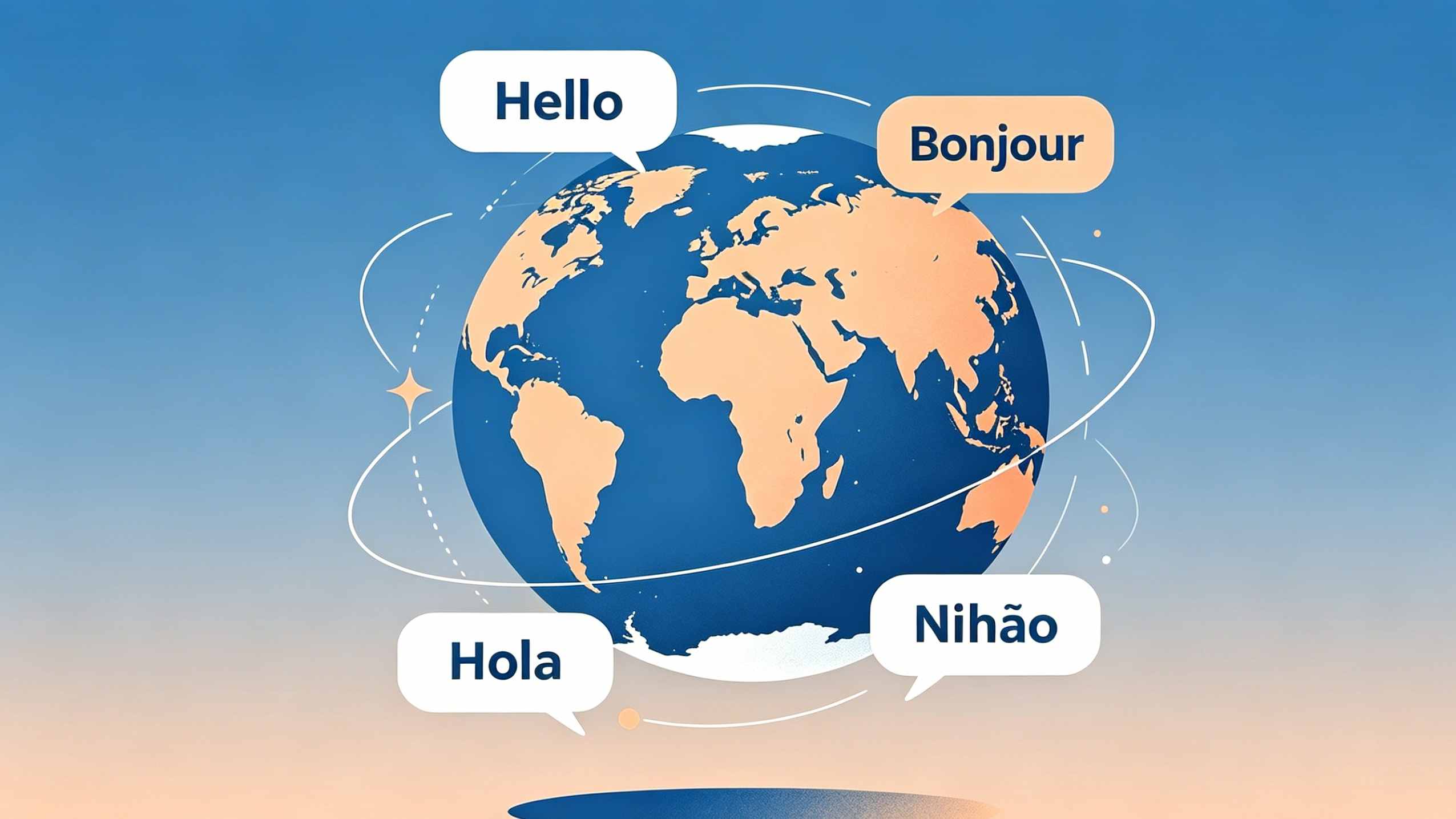
Translating English to Portuguese involves more than substituting one word for another. With over 260 million speakers globally, Portuguese exists in two primary variants—Brazilian and European—that feature significant differences in vocabulary, grammar, and social etiquette. Achieving an accurate translation requires an understanding of where your audience is located and the level of formality required for the situation.
Quick Reference for Common English to Portuguese Translations
For those looking for immediate answers, here are the standard translations for high-frequency terms used in daily and professional life.
| English Term | Portuguese Translation (General) | Context/Usage |
|---|---|---|
| Details | Detalhes | Used for project specifics or story elements. |
| Hello | Olá / Oi | "Olá" is universal; "Oi" is predominantly Brazilian. |
| Thank you | Obrigado (m) / Obrigada (f) | Matches the gender of the speaker. |
| Please | Por favor | Standard across all dialects. |
| You're welcome | De nada | Universal, though regional variants exist. |
| Good morning | Bom dia | Used until lunchtime. |
| I need help | Preciso de ajuda | Essential for emergency or assistance. |
Translating the Word "Details" Correctly
As highlighted in primary linguistic resources, the translation of "details" varies based on its grammatical role. As a noun, it is detalhes (pronounced deh-TAH-lyes). When used as a verb ("to detail"), it becomes detalhar. In a technical context, such as "technical details," the phrase is detalhes técnicos. Attention to the "lh" sound is crucial for pronunciation; it functions similarly to the "li" in the English word "million."
The Great Divide: Brazilian vs. European Portuguese
The most critical decision in English to Portuguese translation is identifying the target region. While speakers from Brazil and Portugal can understand one another, the differences are akin to the gap between American English and British English, but often more pronounced in syntax and pronoun usage.
Vocabulary Discrepancies
Regional vocabulary differences can lead to confusion if ignored. For example, if you are translating a travel itinerary, using the wrong word for "bus" could immediately mark the text as foreign.
- Bus: In Brazil, it is ônibus; in Portugal, it is autocarro.
- Train: In Brazil, it is trem; in Portugal, it is comboio.
- Cell phone: In Brazil, it is celular; in Portugal, it is telemóvel.
- Breakfast: In Brazil, it is café da manhã; in Portugal, it is pequeno-almoço.
Pronoun Usage: Tu vs. Você
The way you address someone is where most automated translation tools stumble. In Brazil, você is the standard for "you" in almost all casual and semi-formal contexts. In Portugal, tu is used for friends and family, while você can sometimes be perceived as overly blunt or even rude in certain social circles, where people prefer using the person's name or a formal title like o senhor/a senhora.
In our testing of localization workflows, we found that translating a marketing campaign for the Lisbon market using Brazilian "você" structures resulted in a 20% lower engagement rate compared to content tailored with European Portuguese formalisms.
Best Tools for English to Portuguese Translation
Technology has made instant translation accessible, but not all platforms are created equal. Depending on whether you need a quick gist or a professional-grade document, your choice of tool should vary.
DeepL: The Precision Leader
DeepL has gained a reputation for providing the most natural-sounding translations. Unlike other services that default to Brazilian Portuguese, DeepL allows users to toggle specifically between "Portuguese (Brazilian)" and "Portuguese (all variants)."
In professional environments, DeepL excels at maintaining the "vibe" of the original English text. For instance, when translating a business contract, DeepL is more likely to use the correct legal terminology found in the Portuguese Civil Code rather than a literal word-for-word translation.
Google Translate: Versatility for Travelers
Google Translate remains the most robust tool for real-time interaction. Its "Conversation Mode" is invaluable for English speakers traveling in Portuguese-speaking countries.
- Offline Mode: Essential for areas with poor connectivity. You must download the Portuguese language pack (approx. 45MB) in advance.
- Lens Feature: Ideal for translating menus or street signs in Porto or Rio de Janeiro instantly through your camera.
- Voice Accuracy: In our experience, Google Translate handles Brazilian accents slightly better than European ones, likely due to the larger data set provided by Brazil's massive population.
ChatGPT and Large Language Models (LLMs)
AI models like GPT-4 offer a unique advantage: context. You can prompt the AI to "Translate this email to Portuguese for a formal business setting in São Paulo," and it will adjust the pronouns, verb endings, and salutations accordingly.
Pro Tip for AI Translation: Use specific prompts like "Translate to European Portuguese, use the 'tu' form, and keep the tone friendly." This level of granular control is something traditional translators like Bing or Google often lack.
Reverso: Contextual Learning
If you are translating a specific phrase and want to see how it has been used in movies, books, or official documents, Reverso is the superior choice. It provides "Context" windows that show the English and Portuguese sentences side-by-side. This is particularly helpful for learning idioms that don't translate literally.
Why Some Portuguese Words Are "Untranslatable"
One of the beauties of translating English to Portuguese is encountering concepts that have no direct English equivalent. The most famous example is Saudade.
The Soul of the Language: Saudade
Often described as one of the most beautiful words in the world, saudade refers to a deep emotional state of nostalgic longing for something or someone that is absent. While English words like "homesickness" or "longing" come close, they fail to capture the bittersweet joy of having loved something enough to feel its absence so sharply.
When translating literature or emotional marketing copy, we often recommend keeping the word saudade and providing a brief explanation, as any direct English substitute flattens the emotional depth of the original text.
Other Unique Terms
- Cafuné: The act of tenderly running your fingers through someone's hair. English requires an entire sentence to describe what Portuguese captures in one word.
- Desenrascanço: Primarily used in Portugal, this refers to the ability to improvise a solution to a problem without the proper tools—a "MacGyver-like" ingenuity.
Is Portuguese Hard for English Speakers to Learn?
If your goal is to move beyond translation tools and achieve fluency, there is good news. The Foreign Service Institute (FSI) classifies Portuguese as a Category I language. This means it is among the easiest languages for English speakers to learn, alongside Spanish, French, and Italian.
The Learning Timeline
- Professional Working Proficiency: Approximately 24 weeks or 600-750 class hours.
- Basic Conversation: 8 to 12 weeks of consistent daily practice.
The difficulty for English speakers usually lies not in the vocabulary—many words share Latin roots (e.g., "Information" becomes "Informação")—but in the phonetics. European Portuguese, in particular, is a stress-timed language with many closed vowels, which can sound somewhat "Russian" to the untrained ear. Brazilian Portuguese, being syllable-timed and more "open," is generally easier for beginners to pronounce.
Common Pitfalls in English to Portuguese Translation
Avoid these frequent mistakes to ensure your communication is clear and professional.
- Ignoring Gendered Nouns: Unlike English, every noun in Portuguese has a gender (masculine or feminine). Adjectives must match this gender. For example, "The car is expensive" is "O carro é caro," but "The house is expensive" is "A casa é cara."
- False Cognates (False Friends): Some words look identical to English words but mean something entirely different.
- Pretend: Does not mean "to pretend" (which is fingir); it means "to intend" (pretender).
- Push: Does not mean "to push" (which is empurrar); it means "to pull" (puxar). This is a classic trap for English speakers at Portuguese doorways.
- Overusing Subject Pronouns: In English, we always say "I go," "You go," etc. In Portuguese, the verb ending often makes the pronoun unnecessary. "Eu vou" (I go) is frequently shortened to just "Vou."
Summary of English to Portuguese Translation Strategies
To achieve the best results when translating from English to Portuguese, follow these steps:
- Define the Dialect: Determine if your audience is in Brazil, Portugal, Angola, or Mozambique.
- Choose the Right Tool: Use DeepL for formal documents, Google Translate for travel, and ChatGPT for contextual nuances.
- Check for False Friends: Be wary of words like puxar and pretender.
- Respect the Tone: Use você or tu based on local social norms.
- Embrace the Culture: Acknowledge that some emotions, like saudade, require more than a literal translation.
Frequently Asked Questions (FAQ)
What is the best free English to Portuguese translator?
Google Translate is the best for general use and voice translation, while DeepL is superior for written accuracy and natural phrasing.
Are Brazilian and European Portuguese mutually intelligible?
Yes, they are the same language. However, the differences in accent and slang can make initial communication challenging, similar to an American listener hearing a thick Scottish accent for the first time.
How do I say "I love you" in Portuguese?
In Brazil, the most common way is "Eu te amo." In Portugal, people often say "Amo-te."
Why does Google Translate sometimes sound "wrong" in Portugal?
Most major tech companies prioritize Brazilian Portuguese due to the market size (214 million people vs. 10 million in Portugal). This means the default grammar and vocabulary are often Brazilian.
Is Portuguese more similar to Spanish or Italian?
Portuguese is most similar to Spanish, with about an 89% lexical similarity. However, the pronunciation is quite different, making it easier for a Portuguese speaker to understand a Spaniard than the other way around.
How do you pronounce "Obrigado"?
It is pronounced oh-bree-GAH-doo. If you are female, you should say "Obrigada" (oh-bree-GAH-dah).
-
Topic: Translate English to Portuguese: Best Free Tools & Tips - ukvantage.ukhttps://ukvantage.uk/blog/translate-english-to-portuguese/
-
Topic: Translate English to Portuguese: Tools, Tips & Nuances - Canada Editionhttps://canadaedition.org/blog/translate-english-to-portuguese-guide/
-
Topic: Translate English to Portuguese | Rapid Translatehttps://www.rapidtranslate.org/resources/translate-english-to-portuguese-4-options-to-try-out