Home
Home
How to Share Data Smartly Without Sacrificing Privacy and Security

Sharing data smartly encompasses two distinct domains: the immediate need for mobile telecommunications users to transfer internet bytes and the strategic imperative for organizations to collaborate on digital information securely. Whether the goal is to send 200MB of mobile data to a friend or to enable a cross-border research team to access petabytes of analytical datasets, the principle remains the same: efficiency must not come at the cost of security.
Quick Guide for Smart Telecommunications Users
For mobile subscribers using the Smart or TNT networks in the Philippines, sharing data refers to the PasaData service. This allows for the transfer of active shareable data to another prepaid or postpaid subscriber.
How to use PasaData via SMS
To transfer data, compose a text message with the following format:
PASADATA <11-digit mobile number> and send it to 808.
For example, texting PASADATA 09181234567 500 to 808 will transfer 500MB of data to the recipient.
How to use PasaData via USSD Menu
Dial *123# on a mobile device, navigate to the "Pasa" or "Share Data" section, and follow the prompts to enter the recipient's number and the desired amount of data.
Rules and Fees
- Minimum Share: The minimum amount that can be shared is typically 50MB.
- Service Fee: Each successful transaction usually incurs a small fee (e.g., 1 Peso).
- Validity: Shared data is generally valid for 24 hours, regardless of the original expiration date of the sender’s data bucket.
- Non-transferable Data: Data specifically tied to certain apps (like YouTube-only or TikTok-only bundles) cannot be shared; only open-access data is eligible.
The Strategic Shift to Intelligent Digital Data Sharing
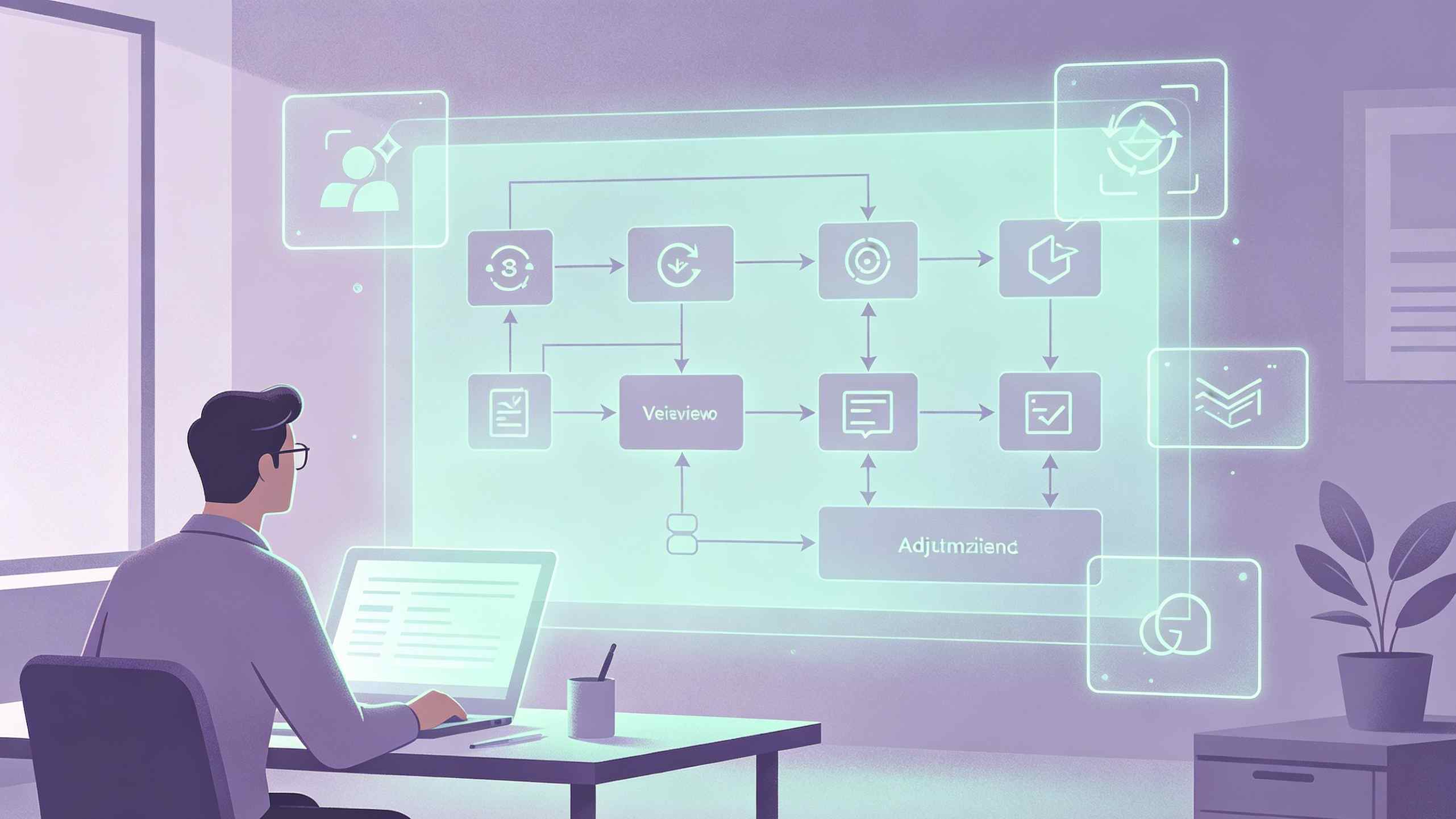
Moving beyond mobile credits, "sharing data smart" in the professional and digital context represents a fundamental shift in how information moves through society. The traditional methods of sharing—emailing spreadsheets, uploading to insecure FTP servers, or physically mailing hard drives—are not only inefficient but represent catastrophic security risks.
In a modern data ecosystem, sharing smart means providing the right people with the right access at the right time, without ever losing control of the underlying asset. Research indicates that Chief Data Officers who successfully implement modern data-sharing frameworks are 1.7 times more effective at demonstrating business value compared to those who maintain siloed environments.
Why Traditional Data Transfers Are Obsolete
To understand how to share data smartly, one must first recognize the failures of "dumb" sharing.
The Version Control Nightmare
When a file is emailed or copied to a third-party server, the sender loses the "single source of truth." If the original data is updated, the recipient continues to work with stale information. Intelligent sharing utilizes live access points rather than static copies.
Security Vulnerabilities
Email attachments are one of the primary vectors for malware and data leakage. Once a file leaves a secure perimeter, there is no way to revoke access, track who has viewed it, or prevent it from being forwarded to unauthorized parties.
High Operational Overhead
Manually extracting, transforming, and loading (ETL) data just to share it with a partner consumes hundreds of engineering hours. A smart approach automates these pathways through cloud-native architectures.
Core Pillars of Smart Data Sharing
Effective data collaboration is built on a foundation of governance, security, and cultural transparency.
Implementing Granular Access Control
Smart sharing is never "all or nothing." Role-Based Access Control (RBAC) allows administrators to define exactly what a user can see. For instance, a marketing analyst might need access to customer purchase trends but should be restricted from seeing Personally Identifiable Information (PII) like home addresses or credit card numbers. By implementing column-level and row-level security, data owners can share the same dataset with multiple stakeholders while showing each only what is relevant to their role.
The Rise of "Share in Place"
Instead of moving data to the user, modern platforms move the user to the data. Using technologies like Delta Sharing or Snowflake Data Sharing, organizations can grant secure access to live tables in a data lake or warehouse. The data remains in the provider's storage, and the recipient queries it through a secure protocol. This eliminates duplication costs and ensures the recipient is always viewing the most current version.
End-to-End Encryption and Zero Trust
Sharing data smart requires a Zero Trust posture: never trust, always verify. Data must be encrypted at rest (using AES-256) and in transit (using TLS 1.3). Even within a trusted network, every access request should be authenticated and authorized. Utilizing OAuth 2.0 for API-based sharing ensures that access tokens are short-lived and tied to specific permissions.
Techniques for Privacy-Preserving Collaboration
When sharing data for research or analytics, the goal is often to extract insights without compromising individual privacy.
Data Anonymization and Pseudonymization
Anonymization involves permanently removing identifiers from a dataset. However, true anonymization is difficult because "re-identification attacks" can cross-reference multiple datasets to unmask individuals. Smart sharing often employs pseudonymization, where identifiers are replaced with consistent aliases, allowing for longitudinal studies without exposing real names.
Differential Privacy
This is a mathematical framework that adds "noise" to a dataset. The noise is calculated such that a query will return an accurate aggregate result (e.g., "What is the average salary?") but makes it impossible to determine the specific value of any single individual in the set. Apple and Google use this technique to collect usage statistics from millions of devices without invading personal privacy.
Data Clean Rooms
A Data Clean Room is a secure environment where two or more parties can join their datasets for analysis without either party seeing the other's raw data. For example, a retailer and a beverage brand might use a clean room to see how many people who saw a digital ad actually bought a soda in-store. The clean room only outputs the aggregated result of the intersection, protecting the proprietary customer lists of both companies.
Best Practices for Organizations
To transition from legacy methods to smart data sharing, organizations should follow a structured roadmap.
1. Catalog and Classify
You cannot share what you do not know you have. Implementing a comprehensive data catalog is the first step. Data should be classified based on sensitivity:
- Public: Can be shared openly.
- Internal: Shared within the company.
- Confidential: Requires high-level encryption and specific NDAs.
- Highly Restricted: Contains PII or trade secrets; requires multi-factor authentication and auditing.
2. Establish a Governance Framework
Smart sharing requires clear ownership. Data Stewards should be appointed to oversee specific datasets, responsible for their quality and for approving access requests. A well-defined governance policy ensures that compliance with regulations like GDPR, CCPA, and HIPAA is automated rather than an afterthought.
3. Choose the Right Platform
The technology stack must support open standards to avoid vendor lock-in. Platforms that support REST APIs and open-source sharing protocols allow for collaboration across different cloud providers (e.g., sharing from AWS to Google Cloud).
4. Monitor and Audit
Smart sharing is not a "set it and forget it" process. Maintaining detailed logs of who accessed what data, when they accessed it, and what queries they ran is essential for security and compliance. Automated alerts should trigger if unusual access patterns are detected (e.g., an account downloading a massive volume of data at 3:00 AM).
Industry-Specific Smart Sharing Applications
Healthcare and Life Sciences
Hospitals and pharmaceutical companies share genomic data to accelerate drug discovery. By using federated learning—where the AI model travels to the data at each hospital rather than the data moving to a central server—researchers can train models on diverse patient populations while strictly adhering to patient privacy laws.
Financial Services
Banks share transaction data with fintech partners to detect fraud in real-time. By using secure APIs, a bank can allow a third-party app to verify a user's balance without ever sharing the user's login credentials.
Supply Chain and Retail
Smart sharing allows retailers to provide suppliers with real-time inventory levels. When a SKU drops below a certain threshold, the supplier is automatically notified, reducing stock-outs and improving efficiency for both parties.
The Future of Smart Data Sharing
We are entering an era of "Self-Sovereign Data," where individuals have greater control over how their personal information is shared with corporations. Blockchain and decentralized identifiers (DIDs) may soon allow users to grant temporary, granular access to their data in exchange for services or compensation, representing the ultimate "smart" sharing model.
Furthermore, AI-driven data discovery will soon allow systems to automatically suggest relevant datasets to users based on their current project, significantly reducing the time spent searching for information while maintaining strict security boundaries.
Summary
Sharing data smartly is a multi-dimensional challenge. For a mobile user, it is about understanding the simple syntax of a PasaData command to help a friend stay connected. For an enterprise, it is a strategic discipline that combines advanced encryption, live-access technology, and rigorous governance to turn data from a siloed liability into a collaborative asset. The common thread is the move away from uncontrolled duplication toward governed, secure, and purposeful access.
FAQ
What is the safest way to share sensitive files?
The safest way is to use a secure cloud-based platform that allows for "link-based" sharing with expiration dates and password protection. Avoid email attachments. For highly sensitive business data, use a platform that supports "share-in-place" to keep the data within your secure perimeter.
How much does it cost to share data on Smart?
For Smart Communications users in the Philippines, there is typically a 1 Peso service fee per PasaData transaction. The data itself is deducted from your existing active shareable data balance.
What is the difference between data sharing and data transfer?
Data transfer involves moving a copy of a file from one location to another, which creates security and versioning risks. Data sharing, in the modern sense, involves granting a user permission to view or query the data at its source without moving it.
Can I share data between different cloud providers?
Yes, many modern data platforms support cross-cloud sharing. This is usually achieved through secure APIs or open protocols like Delta Sharing, which allow a user on one cloud (e.g., Azure) to query data stored on another (e.g., AWS) without complex ETL processes.
How does differential privacy protect my information?
Differential privacy adds mathematical noise to datasets. This ensures that while general trends and patterns remain visible to analysts, the specific data points belonging to any one individual are obscured, making it impossible to "leak" personal details.
What happens to shared PasaData if it isn't used?
Shared data via Smart PasaData usually has a 24-hour validity period. If the recipient does not use the data within that window, the data expires and cannot be returned to the sender.
-
Topic: Secure Data Sharing: The Complete Guide to Modern Data Collaboration | Databricks Bloghttps://www.databricks.com/blog/secure-data-sharing-complete-guide-modern-data-collaboration
-
Topic: Data Sharing Best Practices for Modern Organizations - World 2 Datahttps://world2data.com/data-sharing/
-
Topic: A New Approach to Data Sharing | Databrickshttps://www.databricks.com/resources/ebook/a-new-approach-to-data-sharing/content