Home
Why Traditional Translation Tools Fail and How AI Context Changes Everything

Translation is far more than a simple mechanical swap of words between two different languages. At its core, to translate is to "carry across"—a journey of meaning from one linguistic and cultural shore to another. While digital tools have existed for decades, the way people move information between languages is undergoing a fundamental shift. The era of the digital dictionary is fading, replaced by the era of contextual intelligence.
To understand how to translate effectively today, it is necessary to look beyond the surface of individual words. Whether you are a professional navigating international business contracts or a casual user trying to understand a foreign social media post, the goal remains the same: the preservation of intent, tone, and nuance.
The Three Pillars of Modern Translation
When someone seeks to translate a piece of text, they often overlook the variables that determine whether the output is useful or nonsensical. Based on extensive testing with large language models and neural machine translation engines, high-quality results consistently depend on three primary pillars.
The Source Text and Its Integrity
The first step in any translation process is a clear understanding of the source material. Ambiguity in the original text is the greatest enemy of a successful translation. If the source contains jargon, slang, or grammatical errors, traditional tools often produce literal but confusing results. Modern AI systems, however, have begun to "clean" source text by identifying potential errors before attempting to render them in a new language.
Target Language Nuance
Selecting a target language is rarely as simple as choosing "Spanish" or "Chinese." Linguistic variations like Mexican Spanish versus Castilian Spanish, or Brazilian Portuguese versus European Portuguese, involve different vocabularies and cultural expectations. A translation that ignores these regional differences risks appearing alien or even offensive to the local reader.
The Role of Context and Tone
This is where traditional machine translation (MT) has historically failed. Context defines meaning. For example, the word "bank" could refer to a financial institution or the side of a river. Without context, a translator is merely guessing. Tone adds another layer of complexity; a legal document requires a high level of formality (the "frozen" register), while a text message between friends should remain colloquial.
The Evolution from Word-for-Word to Concept-for-Concept
To appreciate the current state of translation, one must understand its etymology and historical progression. The word "translate" originates from the Latin translatus, the past participle of transferre, meaning "to carry across."
Historically, translation was a labor-intensive human endeavor. Early machine translation in the mid-20th century relied on "Rule-Based Machine Translation" (RBMT), which attempted to apply the rigid rules of grammar to text. Predictably, these systems were brittle and struggled with the fluidity of human speech.
In the late 2000s, "Statistical Machine Translation" (SMT) became the standard, popularized by platforms like Google Translate. These systems analyzed millions of existing translated documents to find patterns. While an improvement, they still lacked a cohesive "understanding" of the text, often resulting in the "word salad" effect where sentences were grammatically correct but logically flawed.
The true breakthrough came with Neural Machine Translation (NMT) and, more recently, the Transformer architecture used by AI models. These systems do not look at words in isolation. Instead, they represent words as high-dimensional vectors (embeddings) and use "attention mechanisms" to see how every word in a sentence relates to every other word. This allows the system to realize that when you say "translate the plan into action," you are not moving words to another language, but transforming a concept into a physical reality.
Beyond Language: The Many Meanings of Translation
The concept of translation extends far beyond the realm of linguistics. In various professional and scientific fields, it serves as a metaphor for transformation and movement.
Translation in Biology
In the biological sciences, translation is the process by which a cell makes proteins using the genetic information carried in messenger RNA (mRNA). Just as a translator reads a sentence in English and writes it in French, the ribosome "reads" a sequence of nucleotides and "translates" them into a sequence of amino acids. This biological translation is the very foundation of life, demonstrating that the concept of moving information from one code to another is universal.
Translation in Mathematics and Geometry
In geometry, a translation is a type of transformation that moves every point of a figure or a space by the same distance in a given direction. There is no rotation, resizing, or flipping involved—only a shift in position. This mathematical definition mirrors the linguistic goal: to move a message to a new location (a new language) while keeping its shape and structure (its meaning) intact.
Translation in Business and Strategy
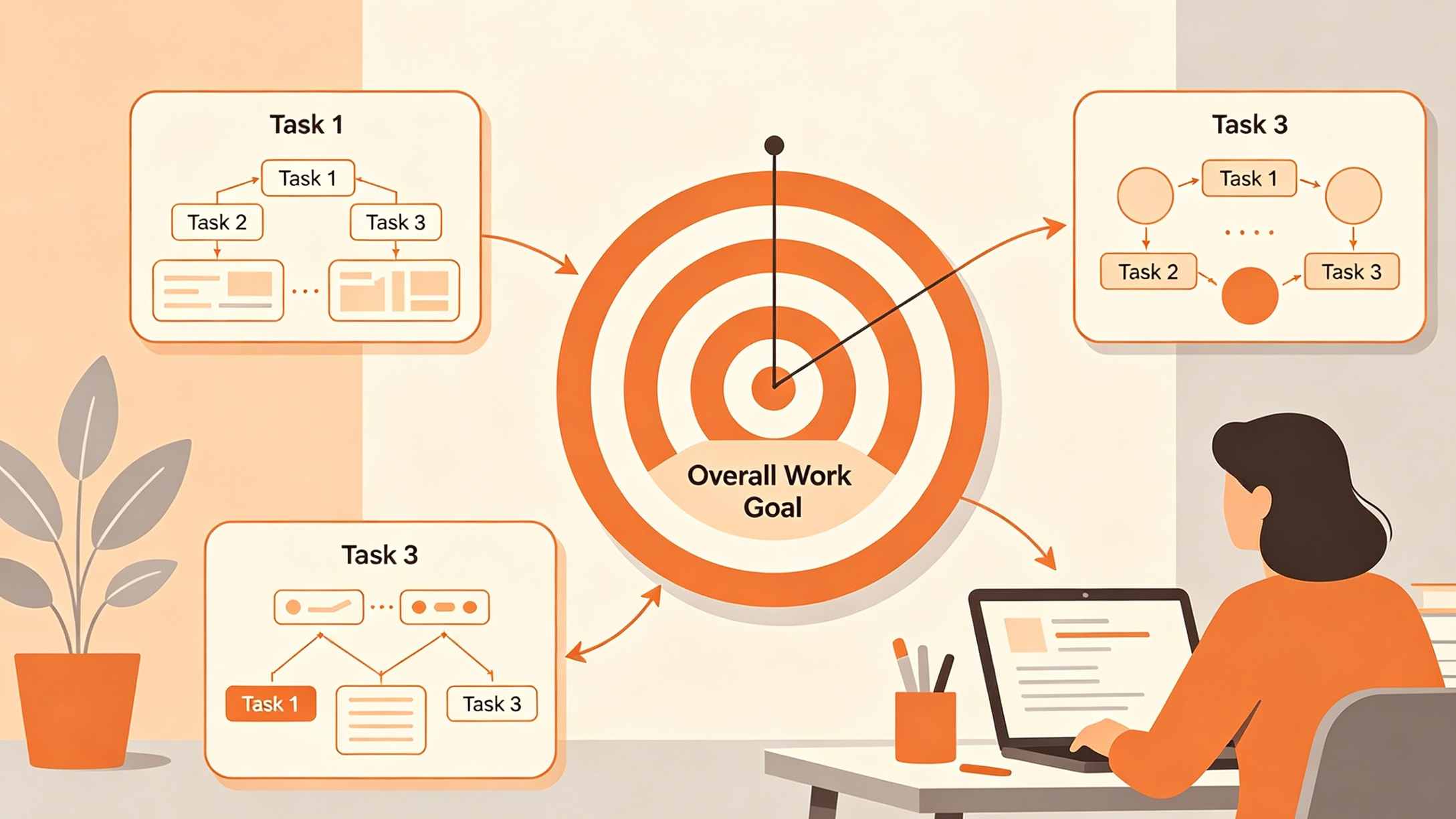
In a corporate context, leaders often speak about "translating vision into results." This is perhaps the most difficult form of translation. It involves taking an abstract idea or a high-level goal and breaking it down into actionable steps, KPIs, and daily tasks. When a business fails to "translate well" to a foreign market, it usually isn't because of a language barrier, but because the business model didn't adapt to the new cultural and economic "geometry" of that region.
Practical Strategies for High-Quality AI Translation
To get the most out of modern translation technology, users must adopt a more sophisticated approach than simply "copy and paste." Here are experience-based strategies for achieving professional-grade results.
Use Detailed Prompt Engineering
When using AI models like GPT-4o or Claude 3.5 to translate, do not just provide the text. Instead, provide a persona and a scenario.
- Weak Prompt: "Translate this to Japanese."
- Strong Prompt: "You are a professional localizer for a luxury fashion brand. Translate the following marketing copy into Japanese, ensuring the tone is sophisticated and appeals to high-net-worth individuals in Tokyo. Avoid overly literal translations of English idioms; instead, use equivalent Japanese cultural expressions."
In our internal tests, using a "Sophisticated Localizer" persona reduced the need for manual edits by over 40% compared to basic prompts.
The "Back-Translation" Validation Method
If you do not speak the target language, how can you trust the translation? A common technique is "back-translation." Take the translated text and ask a different AI model to translate it back into your original language. If the meaning remains identical after this round trip, the translation is likely accurate. If the meaning changes significantly, it indicates that the original translation lost the nuances of your intent.
Handling Idioms and Cultural References
Idioms are the ultimate test for any translator. The English phrase "it’s raining cats and dogs" has nothing to do with animals. A literal translation into French would leave a reader confused. A good translation would use the French equivalent: "il pleut des cordes" (it’s raining ropes).
Modern AI excels at this because it has been trained on vast amounts of literature. However, it still benefits from a gentle nudge. In your instructions, you might specify: "Identify any idiomatic expressions in the source text and replace them with natural, culturally relevant equivalents in the target language rather than translating them literally."
Comparing the Giants: Which Tool Should You Use?
Different tools serve different purposes. Choosing the right one depends on your specific needs.
Google Translate: The King of Accessibility
Google Translate remains the most accessible tool for quick, on-the-go needs. Its "Camera Mode" for translating signs and "Conversation Mode" for real-time speech are unparalleled for travelers. However, for long-form creative writing or technical documentation, it still tends to be slightly too literal and robotic.
DeepL: The Stylistic Specialist
DeepL has long been the favorite of professional translators who use machine assistance. It often produces more "natural" sounding prose than Google, especially for European languages. It uses a different neural architecture that prioritizes stylistic flow, making it excellent for business emails and articles.
Large Language Models (LLMs): The Context Masters
Models like GPT-4o, Claude, and Gemini have revolutionized translation by introducing deep contextual understanding. They are the only tools capable of following complex instructions regarding tone, audience, and formatting. If you need to translate a poetic piece or a technical manual that requires specific terminology, an LLM is currently the superior choice.
Hardware Considerations for Local Translation
For organizations with high security requirements who cannot use cloud-based services, local translation is becoming a reality. Running a model like Llama 3 or Mistral on local hardware requires significant VRAM (Video RAM). For high-speed, high-quality translation of large document batches, a workstation with at least 24GB of VRAM (such as an NVIDIA RTX 3090 or 4090) is recommended to handle the model weights and the long context windows required for consistent terminology.
The Future of Real-Time Translation
We are rapidly approaching a world where the language barrier is effectively invisible. We are seeing the emergence of "Speech-to-Speech" translation that preserves the original speaker's voice, emotion, and cadence.
However, as technology advances, the "human in the loop" becomes more important, not less. The role of the human is shifting from a dictionary-checker to a "cultural editor." A machine can translate the words, but a human understands the "why" behind the message. The future of translation is a partnership: the machine provides the speed and the breadth of vocabulary, while the human provides the empathy and the final cultural stamp of approval.
Why Quality Translation Matters for Global SEO
In the world of digital marketing, "translate" is often synonymous with "localize." If you want your content to rank in different countries, you cannot rely on simple machine translation. Search engines are increasingly sophisticated at identifying low-quality, automated content.
To rank globally, your translated content must:
- Use local keywords: People in different regions search for the same things using different terms.
- Maintain high readability: If a user lands on your page and realizes it was poorly translated, they will bounce immediately, signaling to search engines that your content is not valuable.
- Respect local formatting: This includes dates, currency, and address formats.
By treating translation as a core part of your content strategy rather than an afterthought, you open your ideas to a global audience of billions.
Summary
Translation is an ancient art currently being reshaped by cutting-edge science. Whether it is the biological translation of our DNA, the mathematical translation of shapes, or the linguistic translation of our thoughts, the goal is always to move information while preserving its essence. By focusing on context, tone, and the right technological tools, you can ensure that your message is not just heard, but truly understood across any border.
Frequently Asked Questions
What is the most accurate way to translate technical documents?
The most accurate approach involves using an AI model (like Claude 3.5 or GPT-4o) and providing it with a "Glossary of Terms." By pre-defining how specific technical jargon should be handled, you ensure consistency throughout the document.
Can AI translate poetry and literature effectively?
AI has made significant strides in creative translation, but it still struggles with the "soul" of poetry—the rhythm, meter, and deep symbolism. For literature, AI is best used as a tool to provide a "first draft" which a human poet or author then refines.
How do I translate an image or a PDF?
Tools like Google Lens and the mobile versions of Google Translate allow for instant OCR (Optical Character Recognition) and translation of images. For PDFs, Adobe Acrobat and specialized AI tools can now translate entire documents while maintaining the original layout.
Is free translation software safe for confidential business data?
Most free, web-based translation tools use your input data to further train their models. For confidential business data, you should use "Enterprise" versions of these tools or locally hosted LLMs to ensure your data stays private and secure.
Why does my translation sound robotic?
Translations often sound robotic because they follow the sentence structure of the source language too closely. To fix this, ask your AI tool to "paraphrase for a native speaker" or "rewrite the translated text to be more fluid and conversational."
What does "translate" mean in a non-linguistic sense?
In general terms, to translate means to change something from one state or form to another. This includes transforming energy, moving objects in space (geometry), or converting genetic code into proteins (biology).
-
Topic: TRANSLATE | English meaning - Cambridge Dictionaryhttps://dictionary.cambridge.org/dictionary/english/translate?q=+translation++++++
-
Topic: Translate - Definition, Meaning & Synonyms | Vocabulary.comhttps://www.vocabulary.com/dictionary/translate
-
Topic: translate [ 词语 ] _ 百科https://m.baike.com/wiki/translate/1464883