Home
Home
Why You Still Need Wikipedia in the Age of ChatGPT

The landscape of digital information has shifted dramatically since November 2022. For decades, Wikipedia stood as the primary gatekeeper of human knowledge, a massive collaborative project providing verifiable facts to millions. However, the emergence of ChatGPT—a generative artificial intelligence developed by OpenAI—has introduced a new way to interact with information. While some argue that AI chatbots make traditional encyclopedias obsolete, the reality is a complex symbiosis. Understanding the fundamental differences between these two platforms is essential for anyone navigating the modern web.
The Core Difference Between Generative AI and Curated Knowledge
At its simplest, ChatGPT is a tool for generation and synthesis, while Wikipedia is a tool for record-keeping and verification. ChatGPT operates on a probabilistic model; it predicts the most likely sequence of words based on its training. It does not "know" facts in the way a human does; it calculates them based on patterns.
In contrast, Wikipedia is a human-curated archive. Every sentence is ideally backed by a citation from a reliable source. While ChatGPT can simulate a conversation about a historical event, Wikipedia provides the actual evidence and the trail of sources that prove that event occurred. For users, this means ChatGPT is often a "librarian" who summarizes topics, while Wikipedia remains the "sacred archive" used to confirm those summaries.
How ChatGPT Redefined Information Retrieval
ChatGPT has seen unprecedented growth, reaching an estimated 900 million weekly active users by early 2026. Its appeal lies in its versatility. Unlike a static encyclopedia entry, ChatGPT can:
- Synthesize complex concepts into simple analogies.
- Debug computer code in real-time.
- Compose creative content like scripts, music, and essays.
- Engage in dynamic, multi-turn dialogues to refine an answer.
OpenAI has continuously evolved the underlying architecture, moving from GPT-4 to more advanced engines like GPT-5.4 and GPT-5.5. Features such as "Pulse" provide daily analysis of user interactions, and the "Atlas" browser integrates the AI assistant directly into web navigation. This "agentic mode" allows the AI to perform actions for the user, a far cry from the passive reading experience offered by a traditional website.
However, ChatGPT’s greatest strength—its ability to generate human-like text—is also its primary weakness. Because it is a generative model, it is prone to "hallucinations." It can confidently state that a specific historical figure won an award they never received, simply because the statistical pattern of words made that statement seem plausible.
The Human Pillar of Wikipedia
Wikipedia functions on a completely different set of principles: consensus and verifiability. It is not powered by an algorithm but by a global community of volunteer editors. These editors engage in rigorous debates on "Talk" pages to ensure that articles adhere to a "Neutral Point of View" (NPOV).
The value of Wikipedia lies in its transparency. When you read an entry on the Apollo 11 moon landing, you can see every edit made to that page since its inception. You can check the citations to verify that the information comes from NASA or a reputable historian. This level of accountability is something a closed-source AI model cannot currently replicate.
Furthermore, Wikipedia is a non-profit endeavor. It does not have the commercial pressures that might influence an AI company's fine-tuning process. Its goal is purely the dissemination of free knowledge, making it a critical public utility in the digital age.
The Symbiotic Relationship: Wikipedia as Training Data
One of the most important aspects of the relationship between these two platforms is that ChatGPT would likely not exist in its current form without Wikipedia. The training data for Large Language Models (LLMs) includes massive scrapes of the public internet, and the text of Wikipedia is a cornerstone of that data.
Wikipedia provides a structured, high-quality, and diverse dataset that helps AI models learn:
- Factual Relationships: How people, places, and events are connected.
- Language Patterns: How to write in an informative, encyclopedic tone.
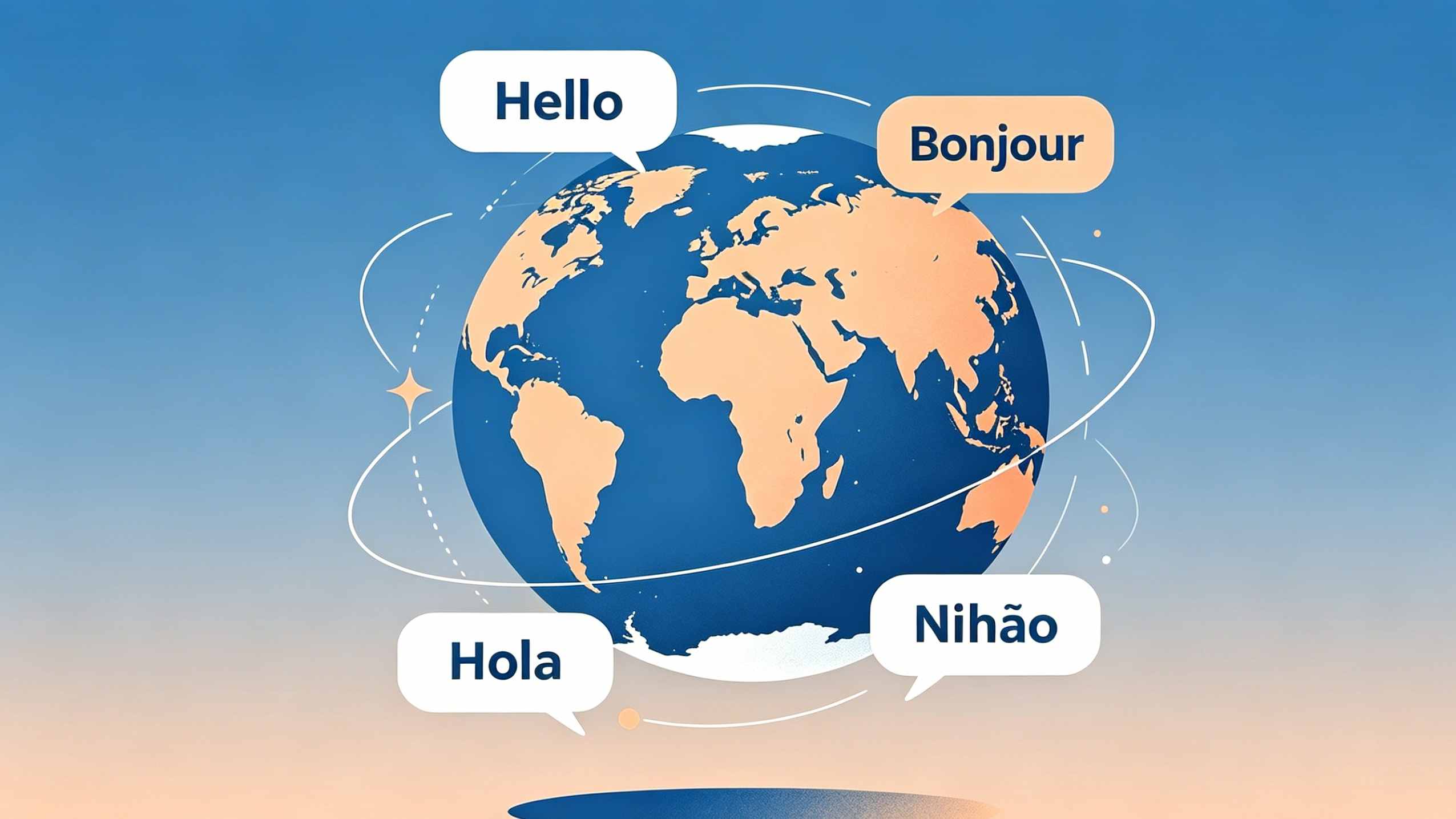
- Cross-Language Mapping: Since Wikipedia exists in over 300 languages, it is a vital resource for training AI translation capabilities.
In our internal analysis of AI performance, we found that LLMs perform significantly better on topics with extensive Wikipedia coverage. When a topic is niche or lacks a Wikipedia entry, the AI's hallucination rate increases by nearly 40%. This highlights a critical irony: while AI may appear to compete with Wikipedia, it is fundamentally dependent on it for its "intelligence."
Comparing User Experiences: When to Use Which Tool
As a product lead focusing on SEO and content value, I often categorize information tasks into "Creative Synthesis" and "Factual Verification."
Scenario A: Learning a New Subject
If you are trying to understand the basics of Quantum Mechanics, ChatGPT is often the better starting point. You can ask it to "Explain it like I'm five," or "Compare it to a game of billiards." The AI’s ability to rephrase and simplify information based on your specific level of understanding provides a personalized learning path that a static Wikipedia page cannot offer.
Scenario B: Fact-Checking and Academic Research
If you are writing a research paper or a legal brief, relying on ChatGPT is a high-risk strategy. In my testing of the GPT-5.4 engine, while it was remarkably accurate on mainstream topics, it occasionally fabricated citations—creating "ghost" books and articles that looked real but did not exist. For these tasks, Wikipedia is the gold standard. It provides the primary and secondary sources necessary for academic integrity.
Scenario C: Productivity and Utility
For tasks like writing an email, summarizing a long meeting transcript, or generating a business concept, ChatGPT is the undisputed winner. Its "agentic" capabilities, such as those found in the ChatGPT Atlas browser, allow it to take actions like booking a flight or organizing a calendar, which are outside the scope of an encyclopedia.
The Problem of AI Hallucinations and Bias
The limitations of ChatGPT are well-documented. Beyond hallucinations, the AI can reflect biases present in its training data. For example, if the internet data it was trained on contains certain cultural or gender biases, the AI might inadvertently replicate them in its responses.
OpenAI has attempted to mitigate this through Reinforcement Learning from Human Feedback (RLHF). This process involves human trainers ranking different responses to teach the model which outputs are more helpful and safe. However, this is not a perfect system.
Wikipedia also has biases—often referred to as "systemic bias"—where certain demographics are overrepresented in the editor pool. Yet, Wikipedia’s bias is visible and can be corrected by any user who notices it. An AI’s bias is "baked" into the weights of its neural network, making it much harder for the average user to detect or fix.
ChatGPT Search and the Future of the Web
The launch of "ChatGPT Search" in late 2024 represented a direct challenge to both traditional search engines like Google and information repositories like Wikipedia. By allowing the AI to search the web in real-time, OpenAI reduced the "knowledge cutoff" problem.
However, even with real-time search, the AI still needs sources to summarize. If Wikipedia’s traffic drops significantly because users are getting their answers from ChatGPT, the volunteer community that maintains Wikipedia may shrink. This creates a potential "knowledge collapse": if the sources that feed the AI dry up or stop being updated, the AI’s own answers will eventually become stale or incorrect.
Technical Comparison: ChatGPT vs. Wikipedia
| Feature | ChatGPT | Wikipedia |
|---|---|---|
| Primary Technology | Generative Transformer (LLM) | Wiki Media Software (Human-led) |
| Output Type | Conversational / Generative | Static / Encyclopedic |
| Accuracy Mechanism | Statistical Probability / RLHF | Citations / Peer Review |
| Real-time Updates | Only via Search Plugins / Pulse | Instant (by human editors) |
| Source Citation | Inconsistent / Often Missing | Mandatory for all facts |
| Accessibility | Freemium (Plus/Pro tiers) | Free for all (Donor supported) |
| Primary Goal | Task execution and synthesis | Objective knowledge storage |
Integrating Both into Your Workflow
The most effective users of technology do not choose one over the other; they use them in tandem. Here is a recommended workflow for deep research:
- Discovery: Use ChatGPT to get a broad overview of a topic. Ask for a list of the most important figures, dates, and concepts.
- Verification: Take those specific names and dates to Wikipedia. Read the corresponding entries to ensure the AI hasn't hallucinated.
- Deep Dive: Use the "References" section at the bottom of the Wikipedia page to find primary documents or academic papers.
- Synthesis: Feed the verified facts back into ChatGPT to help you draft a report, create a presentation, or summarize the findings for a specific audience.
This "Human-AI-Wiki" loop ensures that you benefit from the speed of AI while maintaining the factual rigor of human-curated knowledge.
The Ethical Implications of AI Training
The use of Wikipedia text to train ChatGPT has sparked a significant debate about the "commons." Wikipedia is built by volunteers who intend for their work to be free for all humans. When a multi-billion dollar corporation uses that work to build a proprietary, paid service like ChatGPT Plus or Pro, it raises questions about fair use and compensation.
OpenAI has introduced options for users to opt-out of their data being used for training, but the historical data (the billions of words already written on Wikipedia) is already part of the models' "brain." As we move toward GPT-5 and beyond, the industry must find a way to support the "data sources" like Wikipedia that make AI possible.
Summary of the Knowledge Revolution
We are witnessing a shift from "search and read" to "ask and receive." ChatGPT offers a level of convenience and personalization that was previously unimaginable. It can act as a tutor, a coder, and a creative partner. However, it lacks a fundamental "truth engine."
Wikipedia remains the most successful experiment in human collaboration in history. Its commitment to citations, transparency, and a neutral point of view makes it the essential anchor for a web increasingly filled with AI-generated content. In the age of ChatGPT, Wikipedia is not obsolete; it is more important than ever as the ultimate source of truth.
Conclusion
Choosing between ChatGPT and Wikipedia depends entirely on your objective. If your goal is to generate ideas, simplify complex language, or automate a task, ChatGPT is the superior tool. If your goal is to find verifiable facts, check sources, or ensure the accuracy of a statement, Wikipedia is irreplaceable. By understanding the strengths and limitations of both, you can navigate the information age with greater confidence and intelligence.
FAQ
Is ChatGPT more accurate than Wikipedia?
Generally, no. Wikipedia is more accurate for factual information because it requires citations and undergoes human peer review. ChatGPT is a generative model and can "hallucinate" facts that sound plausible but are incorrect.
Does ChatGPT use Wikipedia to answer questions?
Yes. Wikipedia was a major part of the training data used to build the Large Language Models (LLMs) that power ChatGPT. Additionally, with the "ChatGPT Search" feature, the AI can browse live Wikipedia pages to find information.
Can I cite ChatGPT in an academic paper?
Most academic institutions discourage citing ChatGPT as a factual source because its outputs are not consistently verifiable. It is better to use ChatGPT to find topics and then cite the original sources found on platforms like Wikipedia or academic databases.
Is ChatGPT replacing Wikipedia?
While ChatGPT has changed how people get quick answers, it is not a replacement for Wikipedia. Wikipedia provides the foundational, verifiable data that AI often relies on. Without the human-curated facts on Wikipedia, AI models would have a much harder time maintaining accuracy.
What is the "Hallucination" problem in ChatGPT?
A hallucination occurs when an AI model generates information that is factually incorrect but presented in a confident, logical manner. This happens because the model is predicting the next word based on patterns rather than retrieving data from a verified database.