Home
Home
Accelerate AI Image Editing With Qwen-Image-Edit-2511 Lightning 4-Step LoRA
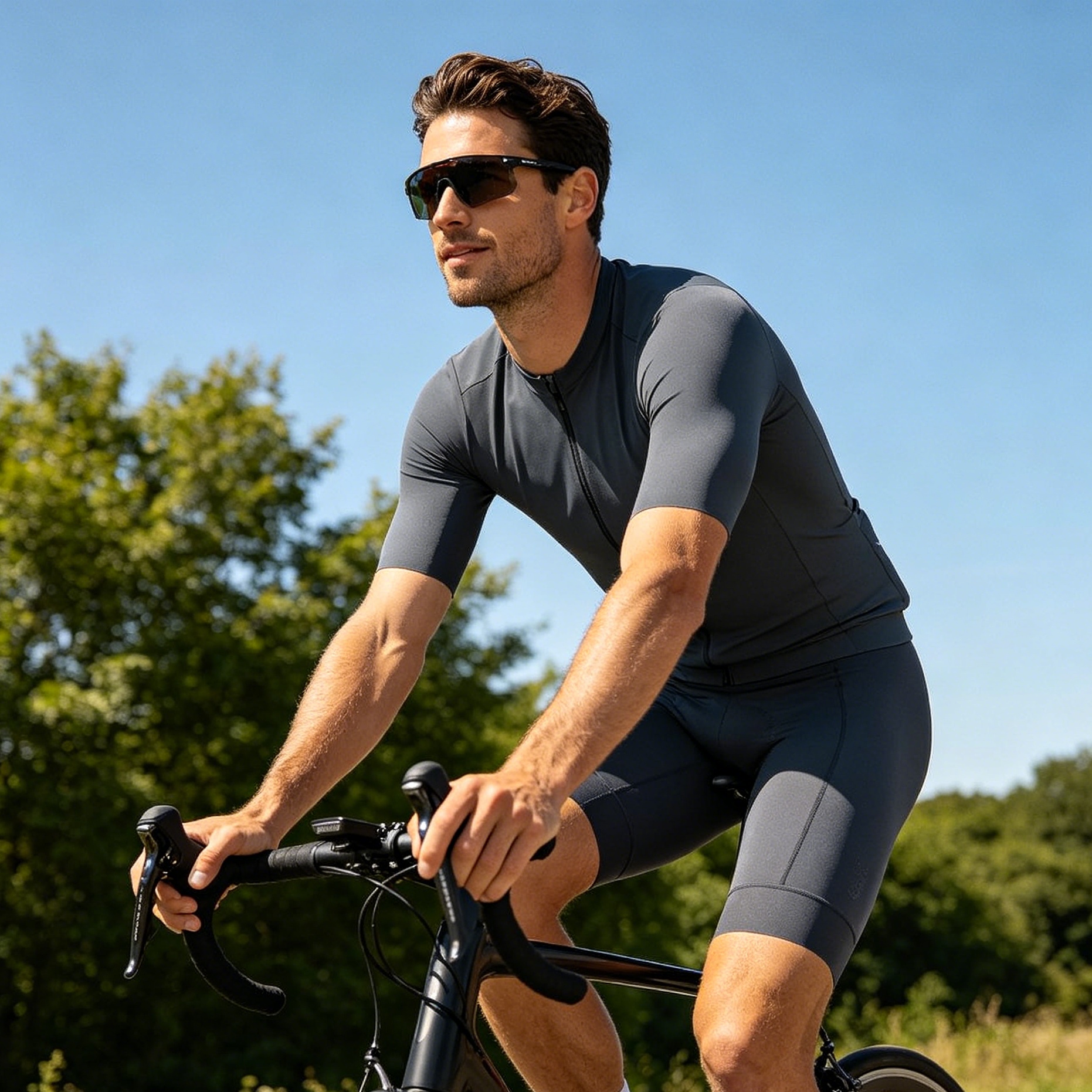
The file qwen-image-edit-2511-lightning-4steps-v1.0-bf16.safetensors represents a significant milestone in the efficiency of multimodal AI. As a specialized Lightning LoRA (Low-Rank Adaptation) weight file, it is designed specifically for the Qwen-Image-Edit-2511 base model. Its primary mission is to compress the traditionally time-consuming diffusion process into just four inference steps, delivering a speed increase of approximately 10 to 25 times compared to standard configurations.
For creators and developers working with image-to-image tasks, this specific weight file in BF16 precision offers a professional-grade balance between computational speed and visual fidelity. Understanding how to deploy and optimize this model is essential for high-frequency editing workflows, particularly within the ComfyUI and Diffusers ecosystems.
Technical Foundations of the 4-Step Lightning Model
The "Lightning" series from the ModelTC team utilizes a technique known as step distillation. In standard latent diffusion models, generating or editing an image typically requires 30 to 50 steps of denoising to achieve high-quality results. Step distillation trains a "student" model (the LoRA) to predict the outcome of a "teacher" model (the full base model) in significantly fewer iterations.
Step Distillation and Inference Efficiency
By concentrating the generative power into 4 steps, the qwen-image-edit-2511-lightning-4steps-v1.0-bf16.safetensors file allows for near-real-time iteration. This is not merely a shortcut; it is a mathematical re-mapping of the diffusion trajectory. In practical terms, an edit that previously took 30 seconds on a mid-range GPU can now be completed in under 3 seconds, enabling interactive "live" editing experiences.
The BF16 Precision Advantage
The "bf16" in the filename stands for Bfloat16 (Brain Floating Point). Unlike the traditional FP16, BF16 offers a much wider dynamic range, which is crucial for maintaining numerical stability during the intensive training and inference of large models like Qwen. For users, this means:
- Reduced Memory Footprint: BF16 uses half the memory of FP32, allowing the model to run on consumer-grade GPUs with 8GB to 12GB of VRAM.
- Stable Training: If you are fine-tuning on top of this LoRA, BF16 prevents gradient overflow issues that often plague FP16.
- Hardware Compatibility: Modern NVIDIA architectures (Ampere and later, such as the RTX 30 and 40 series) are hardware-optimized for BF16, leading to faster throughput.
Installation and Environment Configuration
To utilize this safetensors file, the environment must be correctly structured. It is not a standalone model; it functions as an "adapter" that must be loaded alongside the Qwen-Image-Edit-2511 base weights.
Directory Setup in ComfyUI
For ComfyUI users, the placement of the file is rigid. Proper organization ensures the "Load LoRA" nodes can detect the weights without errors:
- Navigate to your root
ComfyUIfolder. - Locate the
modelsdirectory. - Place
qwen-image-edit-2511-lightning-4steps-v1.0-bf16.safetensorsinto thelorasfolder. - Ensure the base model (e.g.,
qwen_image_edit_2511_bf16.safetensors) is placed in thediffusion_modelsorcheckpointsfolder depending on your specific version of the Qwen-Image-Edit nodes.
Integration with Diffusers
Developers using the Hugging Face diffusers library can load this LoRA dynamically. The typical workflow involves initializing the Qwen2_5_VL or specific Qwen-Image-Edit pipeline and then calling the load_lora_weights method. It is critical to ensure that the torch_dtype is set to torch.bfloat16 to match the LoRA's precision, otherwise, the framework may attempt a conversion that leads to loss of detail or performance degradation.
Optimization Parameters for the 4-Step Workflow
Using a Lightning LoRA requires a departure from standard prompting and sampling habits. Because the model is distilled to work in 4 steps, using "standard" settings will almost always result in visual failure.
The CFG (Classifier-Free Guidance) Rule
The most common mistake when using the 4-step Lightning LoRA is setting the CFG scale too high. In traditional models, a CFG of 7.0 to 9.0 is common. However, for this distilled model:
- Recommended CFG: 1.0.
- Maximum CFG: 2.0.
- Why? The distillation process incorporates the guidance signal into the distilled steps. Pushing the CFG higher than 2.0 will result in "burned" colors, extreme contrast, and posterized artifacts where the shadows become solid black and highlights lose all texture.
Sampler and Scheduler Settings
To achieve the intended 10x speedup, the sampler must be configured to respect the 4-step architecture:
- Steps: Exactly 4. While you can sometimes push to 6 or 8 steps for slightly higher coherence, doing so often introduces noise that the model wasn't trained to handle.
- Sampler:
EulerorEuler Aare generally the most reliable for Lightning models. - Scheduler:
SimpleorSGM Uniformoften yield the cleanest results. Avoid schedulers likeKarrasunless you notice specific fine-detail issues, as they can sometimes over-sharpen the 4-step output.
LoRA Strength
While the default strength is 1.0, experienced users often find a "sweet spot" at 0.85. This allows a tiny bit of the base model's flexibility to remain while still benefiting from the 4-step acceleration. If the image feels too "flat," reducing the strength slightly while increasing steps to 6 can be a viable workaround.
Advanced Multi-Image Editing Workflows
The Qwen-Image-Edit-2511 model is particularly powerful because of its ability to handle multiple reference images. The Lightning LoRA maintains this capability while drastically reducing the time required for complex compositions.
Compositing Subject and Background
In a professional workflow, you might have three inputs:
- A source image of a person (Subject).
- A source image of a specific outfit (Style).
- A source image of a location (Environment).
By utilizing the 4-step LoRA, you can iterate on the prompt to blend these three elements. For instance, the prompt "Apply the outfit from Image 2 to the person in Image 1 and place them in the harbor setting from Image 3" can be processed in seconds. This allows for rapid A/B testing of different lighting conditions or poses without waiting for long render queues.
Maintaining Character Consistency
One of the key enhancements in the 2511 version of Qwen-Image-Edit is character consistency. The Lightning LoRA preserves the identity of the subject even during 4-step inference. This is achieved by the model's high-level understanding of geometric reasoning and facial features, which are less susceptible to the "averaging" effect often seen in other fast-distilled models.
Troubleshooting Common Issues
Despite its efficiency, users may encounter specific technical hurdles when using qwen-image-edit-2511-lightning-4steps-v1.0-bf16.safetensors.
Blurry or Low-Detail Results
If the output appears blurry or lacks the crispness of the base model:
- Check the Resolution: Qwen-Image-Edit-2511 performs best at specific aspect ratios (e.g., 1024x1024 or 1920x1080). If you are generating at non-standard resolutions, the 4-step process may not have enough iterations to resolve fine textures.
- Shift Parameter: In advanced ComfyUI workflows, the "Shift" parameter in the noise scheduler can affect detail. Lowering the shift (to 1.0 or 2.0) can sometimes bring out sharper edges, while higher values (4.0+) result in smoother, softer images.
Grid Artifacts and FP8 Base Models
A documented issue exists when using this BF16 LoRA with a "raw" FP8 (quantized) base model. Users have reported a grid-like pattern over the final image. This occurs because the quantization of the base model without proper scaling conflicts with the LoRA's weights.
- Solution 1: Use the BF16 base model if VRAM allows.
- Solution 2: Use a "Scaled FP8" version of the base model, which has been calibrated to work with BF16 adapters.
- Solution 3: Ensure that if you are using a fused model, the LoRA was applied before quantization, not after.
"Burned" or Over-Saturated Images
As mentioned previously, this is almost always a result of the CFG scale. In the 4-step Lightning architecture, the model is "pre-guided." If you see neon-like colors or lost detail in the skin tones, immediately drop your CFG to 1.0.
Comparing Lightning 4-Step vs. Standard Base Model
| Feature | Standard Qwen-Image-Edit-2511 | Lightning 4-Step (BF16) |
|---|---|---|
| Steps Required | 30 - 50 Steps | 4 Steps |
| Inference Speed | Baseline (1x) | 10x - 25x Faster |
| Ideal CFG | 5.0 - 7.5 | 1.0 - 1.5 |
| Detail Fidelity | High / Cinematic | Good / Iterative |
| VRAM Usage | Moderate | Low (due to BF16/Speed) |
| Best Use Case | Final Hero Renders | Rapid Prototyping / Live Editing |
Summary and Final Recommendations
The qwen-image-edit-2511-lightning-4steps-v1.0-bf16.safetensors file is an indispensable tool for anyone looking to maximize the productivity of their AI image editing pipeline. By leveraging step distillation and BF16 precision, it transforms a complex multimodal task into a lightning-fast process.
To get the most out of this model, remember to:
- Keep your CFG at 1.0.
- Set your sampler to 4 steps.
- Use a BF16 or Scaled FP8 base model to avoid artifacts.
- Leverage multi-image inputs for complex scene composition.
While the 4-step version might trade off a microscopic amount of fine-grained detail for massive speed gains, the ability to iterate 20 times in the time it used to take for a single render makes it the superior choice for most creative workflows.
FAQ
Is qwen-image-edit-2511-lightning-4steps-v1.0-bf16 compatible with SDXL?
No. This safetensors file is a LoRA specifically designed for the Qwen-Image-Edit-2511 architecture. It will not work with Stable Diffusion XL (SDXL), SD 1.5, or Flux models.
Why is the file size around 850MB?
As a LoRA for a large multimodal model, it contains significant weight data to ensure that the distillation process captures enough of the base model's intelligence. While larger than some SD 1.5 LoRAs, it is relatively compact given the complexity of the Qwen-Image-Edit-2511 architecture.
Can I use this for video editing?
While the model is designed for images, it can be integrated into video frameworks like LightX2V. In these cases, the 4-step acceleration is even more critical, as it allows for faster frame-by-frame processing, although temporal consistency will depend on the overall pipeline rather than this LoRA alone.
Do I need a specific VAE for this model?
Yes, it is highly recommended to use the qwen_image_vae.safetensors to ensure the latent space is decoded correctly. Using a standard SDXL VAE will result in corrupted images or incorrect color mapping.
What should I do if my images look like static?
This usually means the LoRA failed to load or there is a mismatch between the LoRA and the base model. Ensure both are for the 2511 version of Qwen-Image-Edit and that you are using a compatible sampler like Euler.
-
Topic: lightx2v/Qwen-Image-Edit-2511-Lightning · Hugging Facehttps://huggingface.co/lightx2v/Qwen-Image-Edit-2511-Lightning
-
Topic: GitHub - ModelTC/Qwen-Image-Lightning: Qwen-Image-Lightning: Speed up Qwen-Image model with distillation · GitHubhttps://github.com/ModelTC/Qwen-Image-Lightning/
-
Topic: FloYo: Qwen Image Edit 2511 Lightning - Multi-Image Edithttps://www.floyo.ai/workflows/qwen-image-edit-2511-lightning-multi-sl3ltb2s5uxo