Home
Home
Mastering Qwen-Image-Edit for Zero-Drift Identity Preservation in AI Image Editing
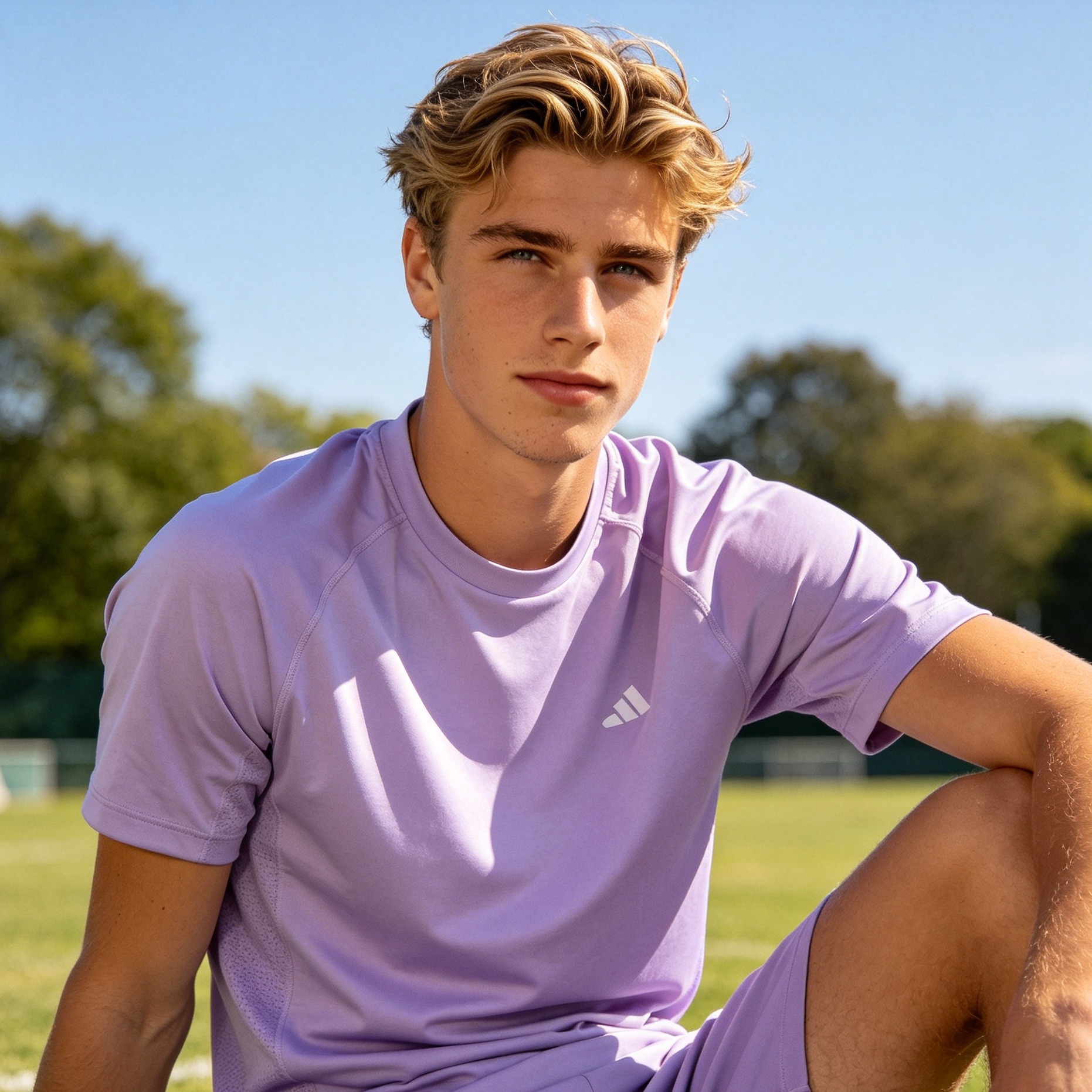
Qwen-Image-Edit, developed by Alibaba's Qwen team, is an advanced AI model specifically engineered to modify images while maintaining the original identity and facial features of the subject. Unlike conventional generative models that often re-render a person's face when changing a background or outfit, Qwen-Image-Edit utilizes a unified 7B-parameter architecture to ensure semantic and appearance consistency. To achieve a "no face changer" result, users must leverage precise identity anchors in their prompts and utilize specialized nodes in environments like ComfyUI.
The Core Philosophy of Qwen-Image-Edit Identity Preservation
The primary challenge in AI image editing has historically been "identity drift." When a user asks an AI to "change the red shirt to a blue one," the model frequently regenerates the entire subject, leading to subtle or drastic changes in facial structure, eye color, or ethnic features. Qwen-Image-Edit 2.0 addresses this by integrating text-to-image generation and image editing into a single model pipeline.
This unified approach allows the model to "understand" which pixels represent the fixed identity and which pixels are subject to the editing instructions. In testing environments using high-end GPUs like the RTX 4090 or A100, the model demonstrates a superior ability to follow spatial instructions compared to Flux.1 [Dev] or Stable Diffusion 3.5, particularly when the goal is to leave the face untouched.
Why Your Face Might Be Changing and How to Stop It
If you are experiencing unwanted face changes while using Qwen, it usually stems from one of three factors: broad prompting, incorrect workflow templates, or parameter misalignment.
1. The Trap of General Prompts
Using a prompt like "change the background to a beach" gives the AI too much creative freedom. While Qwen is designed for consistency, without explicit instructions to preserve the face, the model may attempt to "blend" the subject into the new lighting conditions of the beach, resulting in a face that looks like a different person.
The Solution: Use Identity Anchors. Instead of general terms, describe the features you want to keep.
- Ineffective Prompt: "Change her clothes to a business suit."
- Effective Prompt: "The woman with wavy dark hair and a friendly smile is now wearing a professional black business suit. Keep her facial features and expression exactly as they are in the original image."
2. Misusing Face-Swap Workflows
There is a common misconception that Qwen-Image-Edit is a face-swapping tool. It is not. Many community-made workflows in platforms like ComfyUI are specifically labeled for "Face Swapping," which involves injecting a reference face into a new body. If your goal is to keep the original face, you must avoid these specific templates and use the standard "Image Edit" nodes.
3. Step Count and Guidance Scale Issues
High guidance scales (above 3.0) can sometimes force the model to over-correct the image to match the text, leading to artifacts or character drift. For identity preservation, a guidance scale between 1.5 and 2.5 is often the "sweet spot" where the edit is applied without compromising the subject's integrity.
Technical Implementation in ComfyUI for Professional Results
For professionals seeking granular control, implementing Qwen-Image-Edit via ComfyUI is the gold standard. However, this requires specific node configurations that differ from standard Stable Diffusion workflows.
Required Model Components
To run the model effectively without crashing and with maximum fidelity, the following components are essential:
- Qwen-Edit GGUF/Model: For users with 24GB VRAM (like an RTX 3090/4090), the Q8 version is recommended for the best "smart" editing. If you are limited to 16GB VRAM, the Q5_K_M or Q6 versions provide a necessary fallback with minimal quality degradation.
- Text Encode Qwen Image Edit Node: This is the most critical node. Unlike a standard CLIP Text Encoder, this specialized node accepts both a text prompt and the original image as input. It creates a multi-modal embedding that tells the model exactly what the original subject looks like before the edit begins.
- VAE and CLIP: Ensure you are using the specific VAE and CLIP models released alongside Qwen 2.0. Using mismatched components is a leading cause of the "nightmare fuel" blurry faces that users sometimes report.
Optimization with Lightning LoRAs
Generating high-quality edits can be slow. Using an 8-step or 4-step Lightning LoRA specifically tuned for Qwen can reduce inference time significantly. In a professional production stack, reducing latency from 20 seconds to 4 seconds per image without losing identity consistency is a massive efficiency gain. When using a LoRA, ensure your K-Sampler steps match the LoRA's intended step count (e.g., 8 steps for an 8-step LoRA).
Advanced Prompting Patterns for Identity Anchoring
Success with Qwen-Image-Edit depends heavily on how you structure your instructions. Based on developer experimentation, the "Identity-Preserving Composite" pattern is the most reliable way to ensure a "no face changer" outcome.
The Identity Anchor Pattern
Structure your prompt as follows:
"The [Ethnicity/Nationality] [Gender] with [Specific Hair Detail] from the first image is now [New Action/Setting]. Same [Distinctive Feature 1], same [Distinctive Feature 2], [New Outfit Description]."
Example Case Study:
- Input: A portrait of an Irish woman with shoulder-length wavy dark auburn hair.
- Task: Place her in an office.
- The "No Face Changer" Prompt: "The Irish woman with shoulder-length wavy dark auburn hair from the first image is now standing confidently in a modern open-plan office. Same warm friendly smile, same facial features, wearing a black blazer."
- Negative Prompt: "different ethnicity, different hair color, straight hair, different face shape, generic stock photo, distortion, artifacts."
By explicitly naming the ethnicity, hair texture, and specific smile, you create "anchors" that the 7B model uses to lock the facial geometry in place while it regenerates the background and clothing.
Hardware and VRAM Considerations
Qwen-Image-Edit is a heavy model. Running it locally requires understanding the relationship between model quantization and output quality.
| GPU Hardware | Recommended Model Version | Estimated Inference Speed |
|---|---|---|
| RTX 4090 (24GB) | Q8_0 or Full FP16 | 3-5 Seconds (with LoRA) |
| RTX 3060 (12GB) | Q4_K_S or Q5_0 | 12-18 Seconds |
| A100 (80GB) | Full FP16 / Multi-batch | < 2 Seconds |
| Mac Studio (M2/M3 Ultra) | GGUF Q6 / Q8 | 5-10 Seconds |
If you are running on a 12GB card, you must use the Scale Image to Total Pixels node in ComfyUI. Scaling the input down to roughly 0.5 to 0.7 megapixels before processing will prevent "Out of Memory" (OOM) errors and usually results in better face preservation, as the model doesn't struggle with overwhelming amounts of data.
Chained Editing: The Secret to Complex Modifications
One of the most effective ways to ensure the face never changes is to avoid making too many edits at once. If you need to change a character's clothes, background, and lighting, doing it all in one prompt increases the risk of identity drift.
The Chained Workflow:
- Step 1: Change the clothing. Use a prompt focused only on the shirt/trousers while anchoring the face.
- Step 2: Take the output from Step 1 and use it as the new input. Now, change the background.
- Step 3: Use the output from Step 2 to adjust lighting or color grading.
This iterative process allows the model to maintain better control over the original pixels. Each step only modifies a small percentage of the image, keeping the face "locked" throughout the transformation.
Troubleshooting Common Identity Drift Issues
Why does the face look "ghostly" or blurry?
This is often caused by a lack of negative prompting. Qwen-Image-Edit needs to be told what not to do just as much as what to do. Always include "blur, distortion, artifacts, haze, out of focus" in your negative prompt to keep the facial details sharp.
Why is the ethnicity changing?
Even with Qwen's consistency, the model may default to its training data biases if the prompt is too short. If you are editing a person of a specific ethnicity, you must mention that ethnicity in the prompt to anchor the model's latent space.
Why does the face disappear in dark scenes?
Qwen-Image-Edit struggles with identity preservation in extremely low-light or "noir" style transformations. If you are applying a "Cyberpunk" or "Dark Night" style, try increasing the Guidance Scale slightly and explicitly mention "clear facial features" to prevent the face from becoming a shadow.
Summary: How to Ensure Qwen Does Not Change the Face
- Unified Model Advantage: Qwen-Image-Edit 2.0 uses a 7B unified architecture that is natively better at preserving identity than separate generation-editing pipelines.
- Identity Anchoring: Always describe the specific facial features, hair, and ethnicity of the subject in your prompt.
- ComfyUI Precision: Use the
Text Encode Qwen Image Editnode to provide the model with both the visual and textual context of the original face. - Optimal Parameters: Aim for a guidance scale of 1.5–2.5 and use Q8 quantization for best results on 24GB VRAM cards.
- Negative Prompts: Use robust negative prompts to prevent ghostly artifacts and maintain facial clarity.
Frequently Asked Questions (FAQ)
Can Qwen-Image-Edit perform face swaps?
No. Qwen-Image-Edit is designed for identity preservation, not replacement. If you want to put a new person's face onto an existing body, you should look into tools like ReActor or InstantID. Qwen is for keeping the same person while changing their environment.
What is the maximum resolution for Qwen edits?
Standard output is usually capped at 1024x1024. For higher resolutions, you should perform the edit at 1024x1024 and then use a separate upscaling model (like Real-ESRGAN or a 4x-UltraSharp upscaler) to reach 2K or 4K.
Does Qwen-Image-Edit work on multiple people in one photo?
It can, but it is much more difficult to preserve two identities simultaneously. The best approach for multi-person photos is to mask one person, edit the other, and then repeat the process for the second person.
Is Qwen-Image-Edit 2.0 better than Qwen 1.0?
Yes, significantly. The 2.0 version has much better instruction-following fidelity and spatial understanding. It is also better at rendering text inside images, such as logos on clothing or signs in the background.
What is the best API provider for Qwen-Image-Edit?
If you cannot run it locally, providers like Fal.ai and Segmind offer competitive pricing (roughly $0.003 to $0.005 per image). They handle the infrastructure and VRAM requirements, allowing you to focus on prompt engineering.
-
Topic: Série de tutoriels ComfyUI Épisode 59 : Workflows Qwen Edit pour des retouches d'images plus intelligenteshttps://lilys.ai/fr/notes/comfyui-20260223/comfyui-qwen-image-edit-workflows
-
Topic: Add AI image editing tools (qwen-edit, upscale) by ConalMullan · Pull Request #1 · digitalsamba/claude-code-video-toolkit · GitHubhttps://github.com/digitalsamba/claude-code-video-toolkit/pull/1/files
-
Topic: Qwen Image 2.0 Edit API: Complete Developer Guide | AI API Playbookhttps://aiapiplaybook.com/blog/qwen-image-2-0-edit-api-complete-developer-guide/