Home
Home
How to Build a High Impact Goal Framework for 2026 That Drives Real Results

Planning for 2026 requires more than a simple list of resolutions. As we move deeper into a decade defined by rapid technological shifts, evolving workplace dynamics, and a heightening focus on mental longevity, your goals must be both resilient and adaptive. Success in 2026 will be found at the intersection of intentionality and cognitive science.
To set high-value goals for 2026, focus on four pillars: baseline vitality, high-leverage skill acquisition, automated financial resilience, and deep social connectivity. By moving away from vague aspirations like "being more successful" toward specific metrics—such as completing an AI integration project by Q2 or maintaining a consistent 7.5-hour sleep cycle—you align your daily actions with long-term evolution.
Why 2026 Goals Fail Before They Begin
Understanding the neurological resistance to change is the first step in ensuring your 2026 roadmap remains intact. Most individuals experience "Quitter’s Day" by the second Friday of January. This is not typically a failure of will, but a failure of biological alignment.
The Conflict Between the Amygdala and the Prefrontal Cortex
The human brain is wired for survival and predictability. When you set a bold goal for 2026, such as "launching a secondary income stream" or "transitioning to a new industry," your amygdala—the brain's threat detector—often perceives this change as a risk. It triggers a preference for the familiar, even if the familiar is stagnation.
To bypass this, high-impact goal setting in 2026 utilizes the prefrontal cortex—the center for planning and executive function. By breaking large goals into "micro-scripts" or tiny, non-threatening actions, you prevent the amygdala from hitting the panic button.
Optimizing Your Reticular Activating System (RAS)
Your RAS acts as a biological filter for the massive amount of data you encounter daily. When you define a specific goal for 2026, you are essentially "programming" your RAS to notice opportunities that align with that goal. If your goal is to master generative AI workflows, your brain will suddenly start noticing relevant articles, software updates, and networking opportunities that it previously ignored.
Pillar 1: Health and Wellness Goals for 2026
In 2026, wellness is no longer just about the absence of illness; it is about cognitive performance and biological durability.
The Sleep Optimization Goal
Sleep is the primary lever for all other forms of productivity. Instead of aiming for "better sleep," set a quantitative goal focused on recovery metrics.
- Detail: Implement a "digital sunset" protocol where all screens are deactivated 45 minutes before sleep, at least five nights a week.
- The Science: Reducing blue light exposure stabilizes melatonin production, improving REM cycles which are critical for memory consolidation and emotional regulation in a high-stress year.
The Habit Stacking Fitness Goal
Rather than committing to an hour of gym time that may be unsustainable, use the "Habit Stacking" method.
- Detail: "After I finish my morning stand-up meeting (existing habit), I will perform 10 minutes of functional mobility work (new habit)."
- Implementation: Focus on movements that counteract "tech neck" and sedentary fatigue, such as thoracic spine rotations and hip flexor stretches.
Nutritional Curiosity and Metabolic Health
Moving away from restrictive dieting, the 2026 goal should be nutritional diversity.
- Detail: Integrate one new whole-food recipe per week that focuses on gut health and anti-inflammatory properties.
- Measurement: Track energy levels post-meal rather than just caloric intake. Stable glucose levels lead to consistent cognitive output throughout the workday.
Pillar 2: Career and Finance Goals for 2026
The landscape of work in 2026 is heavily influenced by the "Human-AI Co-pilot" model. Career goals must reflect this new reality to remain competitive.
The Skill Sprint Goal
Identify one high-value skill that acts as a multiplier for your current profession. In 2026, these often include AI prompt engineering, data visualization, or remote leadership.
- Detail: Commit to a 90-day "Skill Sprint." By the end of June 2026, complete a professional certification or build a portfolio project that demonstrates your proficiency in a new tool (e.g., mastering Python for data automation or advanced SQL).
- Experience Insight: In our observations of professional pivots, those who focus on "adjacent skills"—skills that complement their existing expertise rather than replacing it—see the highest ROI in salary negotiations.
The Financial Automation Goal
Financial stress is a significant drain on cognitive bandwidth. For 2026, the goal is to remove the "human element" from saving and investing.
- Detail: Set up an automated hierarchy for every paycheck. Funds should move directly to a high-yield savings account (HYSA) and an investment portfolio before reaching your spending account.
- The Target: Build or maintain a six-month emergency fund. Having this "opportunity fund" allows you to take career risks or handle market volatility without emotional distress.
Networking through Intellectual Contribution
Traditional networking is being replaced by "Proof of Work."
- Detail: Aim to publish one insightful observation or case study per month related to your industry on a professional platform.
- The Goal: Facilitate one "low-stakes" intellectual exchange per month with a peer in your field to discuss emerging trends, moving beyond superficial connections.
Pillar 3: Personal Growth and Intellectual Goals
Information overload is a significant challenge in 2026. Growth goals should focus on deep work and curated input.
The Anti-Doomscroll Goal
Mindless consumption is the enemy of creativity.
- Detail: Replace the first 20 minutes of your morning—traditionally spent on social media—with "Deep Input." This can be reading a physical book, listening to a technical podcast, or journaling.
- Outcome: This sets the tone for your prefrontal cortex to lead the day rather than reacting to external stimuli.
The Documented Life Goal
Active reflection prevents the "blur" of a busy year.
- Detail: Maintain a "One-Sentence Journal." Every evening, record the single most significant event or a key learning point from the day.
- Strategy: At the end of each quarter in 2026, review these entries to identify patterns in your behavior and adjust your trajectory.
The Creative Consumption Goal
Move from being a passive consumer to an active creator.
- Detail: Dedicate four hours a week to a hobby that produces a tangible or digital output—gardening, coding a personal app, painting, or woodcarving.
- Why it matters: Engaging in the "flow state" required for creation reduces cortisol levels and enhances problem-solving skills that carry over into your professional life.
Pillar 4: Relationships and Community Goals
As digital interactions become more synthesized, physical and deep emotional connections become a premium asset.
The Scheduled Quality Time Goal
Generic promises like "we should catch up" rarely materialize into meaningful interaction.
- Detail: Establish a "Non-Negotiable Connection" on your calendar. This could be a monthly family dinner, a bi-weekly call with a long-distance friend, or a weekly date night.
- The Standard: These events are treated with the same priority as a high-stakes business meeting.
The Low-Stakes Hospitality Goal
Community building starts with opening your space.
- Detail: Host a small gathering—four to six people—once every quarter.
- Focus: The goal isn't to provide a gourmet experience but to facilitate conversation and local community cohesion.
How to Make 2026 Goals Stick: The Implementation Strategy
Even the best goal ideas for 2026 will fail without a robust delivery system. Use the following frameworks to ensure your vision becomes reality.
The Rule of Three
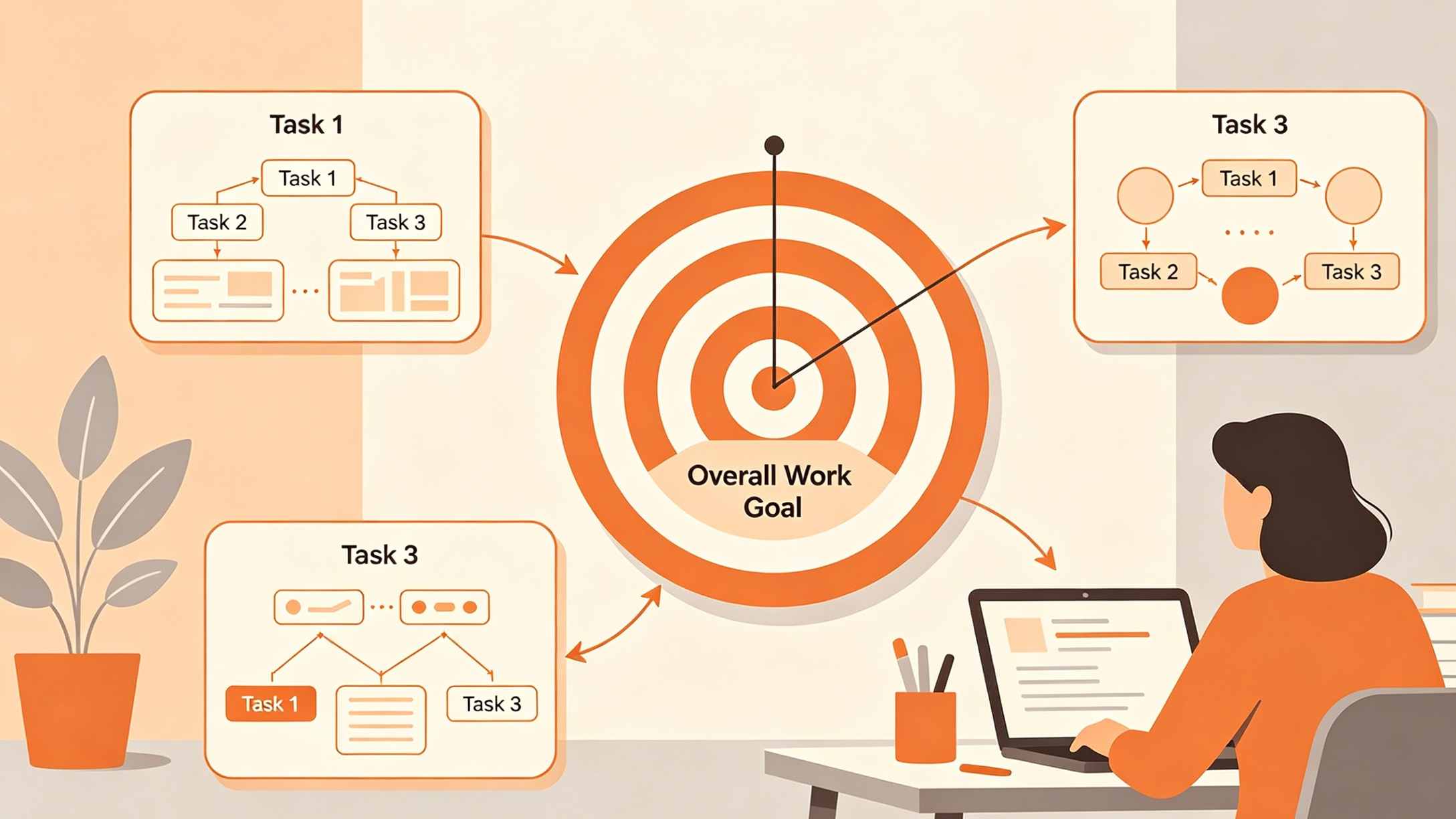
The most common mistake is over-commitment. To succeed in 2026, choose only three primary goals for the entire year:
- One for Physical/Mental Vitality.
- One for Career/Financial Leverage.
- One for Personal Joy/Growth.
Focusing your energy on this tripod ensures that you do not burn out by February.
Applying the SMART Framework for 2026
Every goal must pass the SMART test to move from a "wish" to a "plan":
- Specific: Instead of "save money," use "save $500 per month."
- Measurable: Use a habit tracker or a dedicated spreadsheet.
- Achievable: Does this goal fit your 2026 reality (work hours, family obligations)?
- Relevant: Does this goal align with the person you want to be in 2027?
- Time-bound: Assign deadlines for milestones (e.g., "Complete the first module of my course by February 15").
The Environment Design Factor
Willpower is a finite resource. Successful goal achievers in 2026 focus on designing their environment to make the right choice the easiest choice.
- Example: If your goal is to read more, place a book on your pillow every morning. If your goal is to drink more water, place a filled bottle at your workstation.
Overcoming Common Obstacles in 2026
What to do when you fall off track?
Progress is never linear. If you miss a week of your fitness goal or fail to save for a month, the "All-or-Nothing" fallacy might tempt you to quit entirely.
- The Reset Strategy: Instead of waiting for the next Monday or the next month, implement a "24-Hour Reset." Acknowledge the lapse and return to the habit immediately. One missed day does not ruin a year; the shame associated with the miss is what causes the long-term failure.
Dealing with Information Overload
In 2026, you will be bombarded with "new opportunities" and "must-have tools."
- The Filter: Ask yourself, "Does this new information help me achieve one of my Top 3 goals for 2026?" If the answer is no, it is a distraction, regardless of how innovative it seems.
FAQ: Frequently Asked Questions About 2026 Goal Setting
What is the best way to track goals in 2026?
Digital tools are excellent for quantitative data (like tracking steps or savings), but physical journals are often better for qualitative growth and reflection. A hybrid approach—using a spreadsheet for finances and a paper notebook for personal reflection—is highly effective.
How many goals are too many?
Exceeding five major goals typically leads to a dilution of effort. The "Rule of Three" is the gold standard for high achievers who want to see deep, meaningful progress rather than surface-level movement across a dozen areas.
Can I change my goals halfway through 2026?
Yes. Adaptive goal setting is a sign of intelligence. If a career goal becomes irrelevant due to a shift in your industry, pivot that goal to something that maintains the same "spirit" of growth but with updated tactics.
How do I stay motivated when the initial excitement fades?
Motivation is a feeling; discipline is a system. Rely on your "Habit Stacking" and "Environment Design" to carry you through the days when you don't "feel" like doing the work. The system should work even when your motivation is low.
Summary: Designing Your Path to 2026 Success
Setting goal ideas for 2026 is an exercise in future-proofing your life. By focusing on a few high-leverage areas—health, career skills, financial automation, and deep relationships—you create a foundation that can withstand the fast-paced changes of the modern era.
- Prioritize Vitality: Start with sleep and micro-movements.
- Modernize Your Career: Master a multiplier skill like AI or data analytics.
- Automate Your Peace of Mind: Build a financial buffer through automated systems.
- Cultivate Depth: Exchange digital scrolling for deep work and physical community.
- Apply Cognitive Science: Use the Rule of Three and SMART planning to bypass biological resistance.
The difference between those who merely dream of a better 2026 and those who achieve it lies in the structure of their daily habits. Start small, stay consistent, and let your systems do the heavy lifting.
-
Topic: Over 100 Inspiring New Year Resolutions Ideas for 2026https://brilliancepursuit.com/new-year-resolutions-and-goals/
-
Topic: 51 Goals to Add to Your 2026 Vision Board (That Your Brain Will Actually Help You Hit) ⋆ Joyce Laymanhttps://www.joycelayman.com/51-goals-to-add-to-your-2026-vision-board/
-
Topic: Future Goals: 12 Concrete Examples to Shape Your Life in 2026 and Beyondhttps://afaeducation.org/blog/future-goals-12-concrete-examples-to-shape-your-life-in-2026-and-beyond/