Home
Home
How to Build a High-Impact Annual Marketing Plan That Drives Predictable Revenue

An annual marketing plan is far more than a simple calendar of social media posts or a list of upcoming events. It is the strategic bridge between high-level business objectives and the day-to-day tactical execution required to achieve them. In an era where market dynamics shift overnight, the annual marketing plan serves as a North Star, ensuring that every dollar spent and every hour invested contributes directly to the organization’s growth and sustainability.
This comprehensive guide outlines the framework for building a modern marketing plan that prioritizes revenue, maintains agility, and aligns cross-functional teams toward a singular vision.
The Essential Distinction Between Marketing Strategy and Marketing Planning
Before diving into the components of a plan, it is critical to address a common industry confusion: the difference between strategy and planning. Mixing these two up is often the primary reason why marketing efforts feel scattered or ineffective.
Marketing Strategy is the conceptual framework. it answers the "What" and "Why." It defines your value proposition, your target market segments, and your competitive positioning. It is relatively stable and typically spans three to five years.
Marketing Planning is the operational roadmap. It answers the "How," "When," and "Where." It takes the high-level strategy and breaks it down into specific campaigns, channel selections, budgets, and timelines for the next 12 months.
A high-impact plan requires a clear strategy as its foundation. Without strategy, a marketing plan is merely a collection of random acts of marketing.
Phase One: The Comprehensive Business Audit and Market Analysis
Effective planning begins with a brutal look at reality. You cannot chart a course for the next year without understanding exactly where you stand today.
Conducting a Dynamic SWOT Analysis
While the SWOT (Strengths, Weaknesses, Opportunities, Threats) framework is a staple in business schools, its modern application must be data-driven.
- Strengths: Look beyond "good brand reputation." Analyze specific data points. Do you have a lower Customer Acquisition Cost (CAC) than competitors? Is your email list conversion rate 20% higher than the industry average? These are your leverage points.
- Weaknesses: Identify internal bottlenecks. Perhaps the lead hand-off process between marketing and sales is broken, or your website’s mobile bounce rate is hindering growth.
- Opportunities: Scan the horizon for emerging technologies (like generative AI workflows), untapped market segments, or competitor missteps.
- Threats: These include rising advertising costs, platform algorithm changes, or new disruptive market entrants.
Competitive Intelligence and Gap Identification
Identify your top three to five direct competitors and three indirect competitors. Analyze their messaging, their primary traffic sources, and their product gaps. In our experience managing complex portfolios, we have found that the most significant opportunities often lie in the "service gaps"—areas where competitors are technically proficient but fail to provide the emotional or educational support the customer craves.
Phase Two: Mastering Audience Psychology and Buyer Personas
A marketing plan that tries to speak to everyone ends up speaking to no one. The modern annual plan must transition from broad demographics to deep psychographics and "Jobs to be Done" (JTBD).
Moving Beyond Demographics
Age, location, and job title are starting points, but they don't drive purchases. To build a plan that converts, you must understand the "Why."
- Pain Points: What keeps your target customer awake at 2 AM?
- Motivations: What does a "win" look like for them professionally or personally?
- Information Consumption: Where do they actually hang out? Is it niche Discord servers, professional LinkedIn groups, or industry-specific newsletters?
Mapping the Customer Journey
Every campaign in your annual plan must correspond to a stage in the buyer’s journey:
- Awareness: Solving the customer's problem before they even know your product exists.
- Consideration: Providing the data, whitepapers, and comparisons needed to evaluate solutions.
- Decision: Removing the final friction points to close the sale.
- Retention: Turning a one-time buyer into a brand advocate.
In our internal audits, we often see plans that are 90% focused on awareness and decision, completely ignoring the consideration and retention phases. This leads to a "leaky bucket" revenue model that is unsustainable in the long term.
Phase Three: Engineering SMART Goals and Key Performance Indicators
Vague goals like "increase brand awareness" are the enemies of accountability. Your annual plan must be anchored in SMART (Specific, Measurable, Achievable, Relevant, Time-bound) goals that tie directly to the company’s bottom line.
Aligning Marketing to Revenue
Marketing should not be viewed as a cost center, but as a revenue generator. Your goals should reflect this shift:
- Instead of: "Get more website traffic."
- Use: "Increase organic inbound leads by 25% by Q3, resulting in an additional $1.2M in the sales pipeline."
Identifying Leading and Lagging Indicators
To manage a plan effectively throughout the year, you need to track both:
- Lagging Indicators (Results): Monthly Recurring Revenue (MRR), Customer Lifetime Value (CLV), and total sales volume. These tell you what happened.
- Leading Indicators (Predictors): Website traffic trends, email open rates, and webinar registrations. These tell you what will happen. If leading indicators are down in Q1, you can be certain that lagging indicators will suffer in Q2.
Phase Four: The Marketing Mix and Strategic Positioning
Once you know the "Who" and the "What," you must define the "How." This involves revisiting the 4 Ps of marketing through a modern lens.
Product and Price
Marketing’s role in product and pricing is often underestimated. Your annual plan should address:
- Product Market Fit: Are there features that need to be highlighted or developed to meet the year's goals?
- Pricing Strategy: Will you compete on value, premium positioning, or penetration pricing? How does this impact the perceived quality of the brand?
Place and Promotion
Where will the transaction happen, and how will people find it? This leads into the development of your Unique Selling Proposition (USP). Your USP is the specific reason a customer should choose you over every other option. It must be clear, concise, and woven into every piece of collateral produced during the year.
Phase Five: The Tactical Roadmap and Channel Selection
This is the "meat" of the marketing plan—the specific activities that will take place. We recommend a multi-channel approach that balances long-term brand building with short-term lead generation.
Content Marketing: The Long-Term Asset
Content is the fuel for all other marketing channels. Your annual plan should outline:
- Educational Content: Blog posts, guides, and videos that solve user problems.
- Thought Leadership: Deep-dive reports and opinion pieces that establish authority.
- Content Operations: How will content be produced, repurposed, and distributed? (e.g., turning one long-form webinar into ten social media clips and two blog posts).
Search Engine Optimization (SEO): The Organic Growth Engine
SEO is not a one-time project; it is a continuous process. An annual SEO plan includes:
- Technical SEO: Website speed, mobile optimization, and site structure.
- On-Page SEO: Keyword research and content optimization.
- Off-Page SEO: Link-building strategies and digital PR.
Paid Media: The Accelerated Growth Lever
Paid channels (Google Ads, LinkedIn, Meta, etc.) provide the "oxygen" for new campaigns. The plan must specify:
- Targeting Strategy: Who are we reaching?
- Retargeting: How do we bring back users who didn't convert the first time?
- Platform Mix: Which platforms offer the best Return on Ad Spend (ROAS) for our specific audience?
Social Media and Community Engagement
Social media should be used for two-way communication, not just broadcasting. The plan should define the "voice" of the brand and the specific engagement goals for each platform.
Phase Six: Budget Allocation and Resource Management
One of the most difficult parts of annual planning is deciding where the money goes. We advocate for the 70-20-10 Rule:
- 70% to Proven Channels: Invest the majority of your budget in channels that have a demonstrated history of delivering ROI. If Google Ads always hits your target CAC, fund it fully.
- 20% to Emerging Channels: Allocate funds to "safe bets" that are showing promise but aren't yet fully optimized. This might be a new social platform or a specific influencer partnership program.
- 10% to Experimental Channels: This is your "innovation fund." Use it for high-risk, high-reward experiments that could become the "Proven Channels" of next year.
The True Cost of Implementation
When budgeting, many managers forget to account for the "people cost." Whether you are using an in-house team, freelancers, or a full-service agency, these resources must be accounted for in the plan. Overloading a small team with too many tactical initiatives is a guaranteed recipe for burnout and poor execution.
Phase Seven: The Marketing Calendar and Operational Timeline
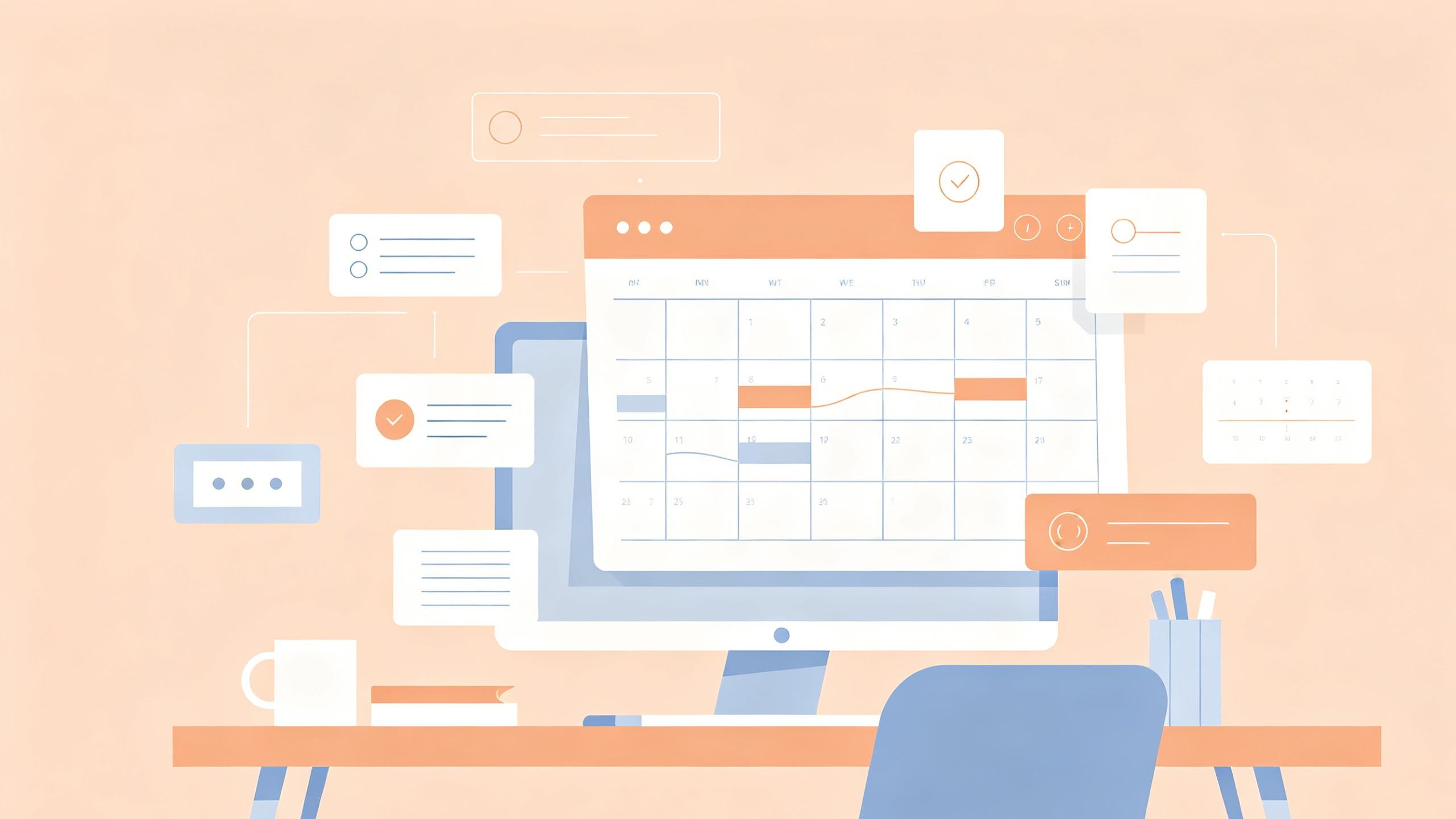
A marketing plan needs a visual representation of time. This calendar should be broken down into quarters, each with a specific theme or focus.
- Q1: Foundations and Launch. Focus on setting up new tracking systems, launching major year-opening campaigns, and optimizing the website.
- Q2: Optimization and Scaling. Analyze the data from Q1. Double down on what worked and cut what didn't.
- Q3: Expansion and New Horizons. Launch major content initiatives or enter new sub-markets.
- Q4: Conversion and Retention. The final push for year-end goals and a heavy focus on customer loyalty programs for the following year.
Integrating Agility through Continuous Planning
The biggest mistake an organization can make is treating the annual marketing plan as a static document. In our professional experience, the most successful companies are those that adopt an "Agile Marketing" mindset.
This means:
- Monthly Performance Reviews: Don't wait for the end of the year to see if you hit your goals. Review KPIs every 30 days.
- Quarterly Pivots: Every three months, look at the market. Has a new competitor emerged? Has a major platform changed its algorithm? If so, adjust your tactics accordingly. The strategy stays the same, but the plan must be flexible.
Common Pitfalls That Derail Annual Marketing Success
Having reviewed hundreds of marketing plans over the years, we see the same mistakes repeated:
- Lack of Executive Buy-in: If the CEO and CFO don't believe in the plan, the budget will be the first thing cut when times get tough.
- Over-Complication: A 100-page plan that no one reads is useless. Keep it concise, actionable, and visual.
- Ignoring the Sales Team: Marketing exists to support sales. If the sales team isn't involved in the planning process, the leads generated will often be of low quality.
- Failure to Track Attribution: If you don't know which channel actually drove the sale, you cannot optimize your budget. Invest in a robust attribution model early in the year.
Summary
A high-impact annual marketing plan is a living, breathing roadmap that connects business goals to tactical execution. By conducting a thorough audit, deeply understanding your audience, setting SMART goals, and maintaining the flexibility to pivot, you create a system for predictable, scalable revenue. Remember, the goal of the plan is not to predict the future perfectly, but to prepare your team to navigate whatever the future holds with clarity and purpose.
FAQ
How long should an annual marketing plan be?
For a small to medium-sized business, a plan of 10 to 20 pages is usually sufficient. For large enterprises, the document may be longer due to multiple product lines and regions, but it should always include a concise 2-page executive summary for stakeholders.
When should I start writing next year’s plan?
The planning process should ideally begin 3 to 4 months before the end of the current fiscal year. This allows enough time for data analysis, cross-departmental collaboration, and budget approval.
What is the most important part of a marketing plan?
The "Target Audience" and "USP" sections are the most critical. If you don't know exactly who you are talking to and why they should care, no amount of budget or fancy tactics will save your marketing efforts.
How often should we update the annual marketing plan?
While the high-level goals usually remain set for the year, the tactical execution should be reviewed monthly and formally adjusted every quarter based on performance data and market changes.
Should we include a contingency budget?
Yes. We recommend setting aside 5% to 10% of the total budget as a contingency fund. This allows you to respond to unexpected opportunities or threats without having to cannibalize funds from existing successful campaigns.
-
Topic: Annual Marketing Planning is Not Deadhttps://allocadia.com/wp-content/uploads/2021/09/Annual-Marketing-Planning-is-Not-Dead-Allocadia.pdf
-
Topic: BEST Annual Marketing Plan Example + Free Template You Can Use Today in 2026 - The Wealthy Creativehttps://wealthycreative.com/marketing-plan-example/
-
Topic: How to Create a Marketing Plan: Guide + Real Examples (2026)https://www.getresponse.com/blog/marketing-plan-examples